
March 15, 2026
ATS Staffing Agency: Optimize Recruitment in 2026
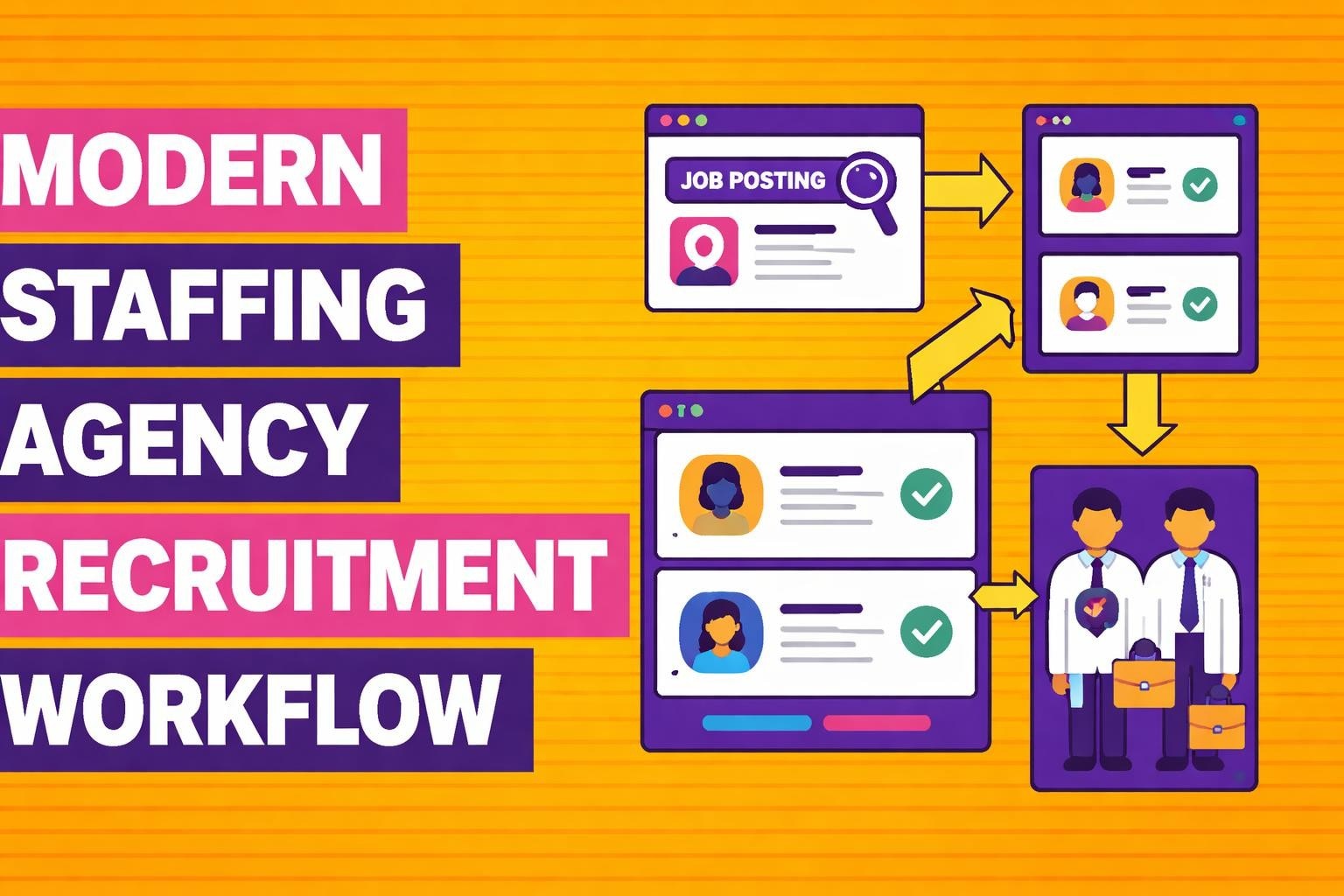
The modern staffing landscape demands precision, speed, and intelligent decision-making at every stage of the recruitment process. A specialized ats staffing agency leverages advanced technology to match candidates with opportunities faster than traditional methods ever could. With artificial intelligence transforming how recruiters evaluate resumes and rank applicants, staffing agencies now compete on their ability to deliver qualified shortlists in moments rather than days. The integration of sophisticated applicant tracking systems has become the differentiator between agencies that thrive and those that struggle to keep pace with client demands.
Understanding the ATS Staffing Agency Model
An applicant tracking system serves as the operational backbone for staffing agencies managing high volumes of candidates across multiple client engagements. These platforms automate the entire recruitment lifecycle from initial job posting through candidate placement and onboarding. The technology has evolved significantly beyond simple resume storage, now incorporating machine learning algorithms that understand context, evaluate qualifications against specific criteria, and surface the most relevant candidates for each position.
Staffing agencies face unique challenges that general corporate recruiters do not encounter. They must simultaneously manage relationships with multiple clients, each with distinct requirements and cultural expectations. An ats staffing agency must track candidates across various stages for different positions while maintaining compliance with industry-specific regulations. The system must also support collaborative workflows where multiple recruiters access the same candidate pool without creating redundancy or confusion.
The financial implications of adopting robust tracking technology extend beyond subscription costs. Agencies must consider implementation timelines, staff training requirements, and integration with existing tools. However, the return on investment typically materializes quickly through reduced time-to-fill metrics, higher placement rates, and improved client satisfaction scores. Modern platforms designed specifically for staffing operations understand these economic realities and build features that directly impact revenue generation.
Core Capabilities That Define Modern Staffing ATS Solutions
Resume parsing technology has advanced dramatically, now extracting not just contact information and employment history but also nuanced details about project contributions, technical proficiencies, and industry certifications. The most effective systems employ natural language processing to understand context rather than simply matching keywords. This capability allows an ats staffing agency to build comprehensive candidate profiles that reveal potential matches human reviewers might overlook during manual screening.
Automated job distribution represents another critical functionality. When a staffing agency secures a new client requirement, the system should simultaneously post that opportunity across relevant job boards, social media platforms, and career sites without manual intervention. This multi-channel approach maximizes candidate reach while minimizing administrative overhead. Advanced solutions also track which sources generate the highest-quality applicants for specific role types, enabling data-driven decisions about where to invest recruitment marketing budgets.
Communication automation streamlines candidate engagement throughout the hiring journey. Personalized email sequences acknowledge applications, provide status updates, and nurture relationships with candidates who may not fit current openings but represent strong future prospects. These recruiting automation tools maintain candidate interest while freeing recruiters to focus on relationship-building conversations rather than administrative communications.
Compliance management functionality proves especially valuable for staffing agencies operating across multiple jurisdictions or serving regulated industries. The system must maintain audit trails documenting every interaction, decision, and data change. Built-in workflows ensure that required documentation gets collected at appropriate stages, reducing the risk of placement delays or legal complications. For agencies placing healthcare professionals, IT contractors, or financial services staff, these compliance features often justify the entire platform investment.
AI-Powered Candidate Ranking Transforms Agency Operations
Traditional resume screening consumes enormous recruiter time while introducing subjective bias into the selection process. AI-powered recruitment tools analyze hundreds of data points across candidate profiles, comparing qualifications against job requirements with mathematical precision. These algorithms identify transferable skills, recognize equivalent certifications across different geographies, and even assess career trajectory patterns that suggest strong cultural fit.
The ranking mechanism provides recruiters with prioritized shortlists where the most qualified candidates appear at the top. Rather than reviewing every application sequentially, recruiters can immediately engage with the top 10 or 15 profiles knowing they represent the strongest matches. This approach dramatically reduces time-to-shortlist metrics while improving placement quality. Agencies report that automated resume screening software enables individual recruiters to manage 40 to 50 percent more requisitions without sacrificing quality.
Machine learning models improve continuously as recruiters provide feedback on candidate suitability. When a recruiter advances a candidate the system initially ranked lower, the algorithm learns which factors proved more important than initially weighted. Conversely, when highly-ranked candidates perform poorly in interviews or placements, the model adjusts future scoring accordingly. This feedback loop creates increasingly accurate predictions over time, essentially training the system to think like your most successful recruiters.
Integration between candidate ranking and client relationship management ensures that the right profiles reach decision-makers at the right moment. When a hiring manager logs into their client portal, they should see candidates already sorted by match quality with clear explanations of why each person made the shortlist. This transparency builds client confidence while reducing the back-and-forth typically required to align on candidate selection criteria.
Workflow Automation Strategies for Staffing Agencies
Implementing effective applicant tracking requires thoughtful process design before technology deployment. Agencies should map their current recruitment workflows, identifying bottlenecks where candidates stall or fall through cracks. Common friction points include delayed resume review, inconsistent interview scheduling, and poor communication during background check periods. Once these challenges surface, automation can address each systematically.
Trigger-based workflows activate specific actions when candidates reach defined milestones. When a candidate completes a skills assessment, the system might automatically schedule them for a phone screen with the next available recruiter. After a successful client interview, the workflow could initiate background check requests and send the candidate preparatory materials about the organization. These automated sequences ensure consistent candidate experiences regardless of which recruiter manages the relationship.
Assignment rules distribute incoming applications across recruiting teams based on specialization, workload, or geographic territory. An ats staffing agency handling both technology and healthcare placements needs to route software engineer applications differently than nursing candidate profiles. Intelligent assignment considers current recruiter capacity, preventing overload situations where quality suffers due to volume pressures. The system can also escalate unreviewed applications after specified timeframes, ensuring no candidate gets ignored during busy periods.
Status tracking provides real-time visibility into where every candidate stands across all open requisitions. Dashboard views show recruiters which candidates need immediate attention, which are progressing smoothly through workflows, and which have stalled requiring intervention. Managers gain oversight into team productivity metrics, identifying coaching opportunities or resource allocation needs before they impact client deliverables.
Integration Ecosystems That Extend ATS Value
Modern staffing operations rely on specialized tools beyond core applicant tracking functionality. Background check providers, skills assessment platforms, video interviewing services, and payroll systems all play roles in successful placements. The ats staffing agency model works best when the central platform integrates seamlessly with these complementary solutions, creating a unified technology ecosystem rather than disconnected point solutions.
Application programming interfaces enable data exchange between systems without manual file transfers or duplicate entry. When a candidate advances to the offer stage, the ATS should automatically create their profile in the onboarding platform with all relevant information pre-populated. Similarly, skills assessment results should flow directly into the candidate record, appearing alongside resume details and interview notes. These integrations eliminate administrative tasks while reducing errors that occur during manual data transfer.
Job board partnerships determine how efficiently agencies can source candidates across multiple channels. Premium ATS solutions maintain relationships with major job boards, professional networks, and niche industry sites, posting openings with a single click. The system should also capture source attribution data, tracking which channels generate applications and ultimately successful placements. This intelligence allows recruitment teams to optimize their sourcing strategies based on demonstrated performance rather than assumptions.
Client portal integrations enhance collaboration between staffing agencies and hiring organizations. When clients can log in to review candidate profiles, provide feedback, and schedule interviews without email exchanges or phone calls, the entire process accelerates. The portal should reflect real-time status updates, so clients always have current information about their requisitions. This transparency builds trust while reducing the coordination burden on recruiters.
Measuring Success Through ATS Analytics
Performance measurement separates high-performing staffing agencies from those operating on intuition rather than data. Comprehensive analytics dashboards should display key metrics including time-to-fill, source quality, recruiter productivity, and client satisfaction indicators. These measurements provide objective feedback about what works and what requires adjustment across the recruitment operation.
Time-to-fill metrics track how many days elapse between requisition opening and candidate placement. This measurement matters enormously to clients who lose productivity every day a position remains vacant. An ats staffing agency can segment this metric by role type, seniority level, or industry to identify where they excel and where improvement opportunities exist. Consistently long time-to-fill periods in specific categories might indicate sourcing challenges, unrealistic client expectations, or internal process inefficiencies.
Candidate quality scores aggregate various indicators including interview pass rates, offer acceptance percentages, and placement longevity. When 90 percent of candidates presented for client interviews advance to second rounds, that suggests excellent screening quality. Conversely, low offer acceptance rates might indicate compensation misalignment or poor candidate preparation. Tracking these quality metrics helps agencies refine their evaluation criteria and candidate engagement approaches.
Recruiter productivity analytics reveal how efficiently team members convert activity into placements. Metrics like resumes reviewed per placement, interviews conducted per offer, and requisitions managed per recruiter provide insights into individual performance. These measurements should inform coaching conversations rather than punitive actions, helping recruiters understand where they might improve their approach. Agencies using AI tools for talent acquisition typically see productivity improvements of 30 to 50 percent as technology handles routine screening tasks.
Client retention and satisfaction metrics ultimately determine long-term agency success. Survey scores, repeat business rates, and net promoter scores indicate whether clients value the service they receive. Strong ATS platforms facilitate these measurements by tracking client interactions, documenting feedback, and monitoring relationship health indicators. When client satisfaction dips, agencies can investigate whether specific recruiters, process gaps, or candidate quality issues require attention.
Selecting the Right ATS for Your Staffing Agency
Evaluating potential applicant tracking systems requires careful consideration of both current needs and future growth trajectories. Agencies should begin by documenting their essential requirements, differentiating between must-have capabilities and nice-to-have features. This prioritization prevents analysis paralysis when comparing platforms that each offer hundreds of features with varying degrees of relevance to specific operational models.
Scalability considerations prove critical for growing agencies. A system that works well managing 500 candidates and 20 open requisitions might struggle when those numbers increase tenfold. Investigate how platforms handle increased user counts, whether pricing models penalize growth, and how performance degrades under heavy usage. Speaking with similar-sized agencies using the platform provides realistic insights beyond vendor promises.
User experience directly impacts adoption rates and ultimately return on investment. The most sophisticated feature set delivers no value if recruiters find the interface confusing or workflows cumbersome. Request extended trial periods that allow multiple team members to evaluate the platform using real requisitions and actual candidates. Pay attention to how many clicks common tasks require and whether the system supports the way your recruiters naturally work.
Vendor stability and product roadmap alignment matter more than many agencies initially recognize. Research the company's financial health, customer retention rates, and development velocity. A vendor struggling financially might reduce support quality or cease innovation. Similarly, examine whether the product roadmap emphasizes capabilities relevant to staffing agencies or focuses on features designed for corporate recruiting teams with different priorities.
Support quality and implementation assistance separate vendors who view customers as partners from those focused purely on transactions. Evaluate the onboarding process, training resources, and ongoing support options. Why every staffing agency needs a modern applicant tracking system becomes clear during implementation when dedicated support resources help configure workflows, migrate data, and troubleshoot initial challenges that inevitably arise.
Overcoming Common ATS Implementation Challenges
Data migration from legacy systems or spreadsheets represents one of the most daunting aspects of transitioning to a new platform. Agencies often maintain years of candidate information, client history, and placement records they cannot afford to lose. Successful migrations require careful planning, including data cleanup before transfer, field mapping between old and new systems, and validation protocols ensuring nothing gets lost or corrupted during the transition process.
Change management challenges can derail even technically sound implementations. Recruiters comfortable with existing processes may resist new workflows regardless of their theoretical superiority. Address this resistance through early involvement in system selection, comprehensive training programs, and clear communication about how the new platform will make their jobs easier rather than more complicated. Identifying internal champions who embrace the technology and can support peers proves invaluable during transition periods.
Customization requirements often conflict with vendor best practices, creating tension between configuring the system to match current processes versus adapting processes to leverage platform strengths. Generally, agencies benefit from adopting proven workflows built into quality systems rather than heavily customizing platforms to replicate legacy approaches. However, truly unique operational requirements may justify custom development, particularly for agencies serving highly specialized niches.
Integration complexity multiplies when connecting multiple third-party systems to the central ATS platform. Each integration point represents potential failure modes requiring ongoing monitoring and maintenance. Prioritize integrations based on impact and frequency of use. Automating candidate background checks used for every placement deserves higher priority than integrating with a video interviewing platform used only for senior-level searches.
Performance optimization becomes necessary as candidate databases grow and user counts increase. Regular database maintenance, archiving old requisitions, and purging duplicate records prevent system slowdowns. Work with vendors to understand performance benchmarks and monitoring tools that identify degradation before it impacts user experience. Agencies managing hundreds of thousands of candidate records need proactive database management strategies.
Future Trends Shaping ATS Technology for Staffing
Predictive analytics capabilities will increasingly help agencies anticipate hiring needs before clients articulate requirements. By analyzing historical patterns, market trends, and client growth trajectories, advanced systems might suggest proactive candidate sourcing for roles likely to open within coming months. This anticipatory approach positions agencies as strategic partners rather than reactive order-takers.
Mobile-first experiences recognize that both candidates and recruiters increasingly work from smartphones and tablets. Next-generation platforms provide full functionality through mobile apps rather than merely offering limited access to desktop features. Recruiters can review candidate profiles, conduct video interviews, and submit candidates to clients from anywhere. Candidates complete applications, upload documents, and communicate with recruiters entirely through mobile devices.
Blockchain technology may eventually address verification challenges that currently slow the hiring process. Educational credentials, employment history, and professional certifications could exist on distributed ledgers that employers and candidates control without intermediaries. This infrastructure would enable instant verification of candidate claims while reducing fraud risk and administrative burden.
Advanced natural language processing will make conversational interfaces practical for both candidates and recruiters. Rather than navigating complex search filters, recruiters might simply describe the candidate they need in plain language and receive relevant profiles. Candidates could ask systems about application status, interview preparation, or role details and receive immediate accurate responses without human intervention.
Enhanced diversity and inclusion features will help agencies support clients' equity initiatives while avoiding discriminatory practices. Systems might blind initial resume reviews to prevent unconscious bias, track diversity metrics across candidate funnels, and alert recruiters to potential bias patterns in their selection decisions. These capabilities address both ethical imperatives and practical concerns about accessing diverse talent pools.
Maximizing ROI From Your Staffing Agency ATS
Strategic configuration transforms a capable platform into a competitive advantage. Invest time designing custom fields that capture information unique to your specialization. Technology staffing agencies might track programming languages, cloud platform certifications, and security clearance levels. Healthcare staffing operations need fields for licenses, specializations, and shift preferences. These custom data points enable more precise matching and better client service.
Continuous training ensures team members leverage the full platform capability rather than using only familiar features. Schedule quarterly training sessions introducing underutilized functionality, sharing best practices across the team, and addressing questions that emerge during daily use. Create internal documentation specific to your workflows since generic vendor training materials may not address your exact processes.
Regular process audits identify workflow bottlenecks and optimization opportunities. Review reports showing where candidates spend the most time between stages. If candidates consistently wait three days between phone screens and client submissions, investigate whether that delay stems from scheduling challenges, information gathering needs, or simply process design. Most delays create opportunities for competitors to engage candidates before your agency advances them.
Client feedback loops improve service delivery while strengthening relationships. After every placement, survey clients about their experience with the candidate selection process, communication quality, and overall satisfaction. Aggregate this feedback to identify systemic improvement opportunities. Share positive feedback with team members to reinforce behaviors that clients value.
Technology partnerships extend platform capabilities without requiring custom development. Identify tools addressing specific needs like skills assessment, reference checking, or candidate engagement and evaluate their integration quality with your ATS. Purpose-built tools often outperform general platform features for specialized functions while maintaining data continuity through integration.
Implementing a sophisticated applicant tracking system transforms staffing agency operations from administrative chaos to streamlined efficiency. The combination of intelligent automation, AI-powered candidate ranking, and comprehensive workflow management enables recruiters to focus on relationship building rather than manual resume review. As competition intensifies and client expectations rise, technology advantage becomes operational necessity. Klearskill delivers the AI-powered recruitment intelligence that staffing agencies need to rank candidates accurately and build winning shortlists in moments rather than hours, positioning your agency as the partner clients choose when quality and speed matter most.


