
January 16, 2026
Search for Candidates Guide: Expert Strategies for 2026

Finding top talent is tougher than ever, but the right approach to search for candidates opens new possibilities in a competitive job market. Recruiters who master advanced search techniques, leverage technology, and use data-driven strategies consistently build stronger talent pipelines.
This guide reveals proven methods to search for candidates effectively in 2026. You will learn how to navigate modern candidate databases, apply smart filters and Boolean logic, harness automation and AI, optimize every sourcing channel, and future-proof your recruitment strategy. Get ready to transform your hiring process and stay ahead of the curve.
Understanding the Modern Candidate Database
Recruiters in 2026 face a dynamic landscape, where the ability to search for candidates efficiently hinges on the quality of their databases. The evolution from basic spreadsheets to modern applicant tracking systems and candidate relationship management platforms has transformed recruitment. Today’s systems, like Lever and JazzHR, offer advanced capabilities that go far beyond simple record keeping.
A well-maintained database is the backbone of any effective search for candidates. Clean, structured data ensures that recruiters can instantly locate individuals with the right skills, experience, and availability. Segmentation, categorization, and tagging allow for rapid retrieval, letting teams organize talent pools by role, skillset, or even previous engagement level. Modern platforms make it easy to distinguish between candidate profiles and specific opportunities, so details never get lost in the shuffle.
Accurate data entry is critical for searchability. Every profile should include comprehensive fields, such as skills, education, source of application, and workflow status. Metadata like last interaction date or recruiter notes further enhances discoverability. However, challenges persist. Duplicate profiles, incomplete information, and ever-tightening data privacy regulations can undermine even the best systems.
Industry statistics reveal that using structured candidate databases can reduce time-to-hire by up to 30 percent. This efficiency is only possible when data hygiene is prioritized and the right technology is in place. For recruiters aiming to stay ahead, choosing a platform with robust features is essential. For a deeper look at leading platforms, see this review of the best applicant tracking software available today.

Key Database Features to Maximize Search Efficiency
To truly optimize the search for candidates, focus on databases equipped with advanced filtering, resume parsing, and customizable fields. These features turn a massive talent pool into a manageable, searchable resource. For example, filters for location, skills, or application date allow recruiters to quickly home in on the best matches without sifting through irrelevant profiles.
Integration with sourcing tools is another game changer. It enables seamless data flow from job boards, referrals, and even social platforms straight into your database. Saved searches and filter templates let hiring teams revisit recurring needs with a single click, saving time and reducing manual effort.
Resume keyword indexing is essential for modern recruitment. It ensures that every keyword or skill listed in a CV is searchable, even if nestled within attachments or recruiter notes. Advanced search across attachments and notes uncovers hidden gems in your database, surfacing candidates who might otherwise remain buried.
By leveraging these features, recruiters can streamline every search for candidates, making the process not only faster but also more precise. The right database tools provide a strategic edge, helping organizations build high-quality talent pipelines and adapt quickly to changing hiring demands.
Mastering Search Filters, Boolean Logic, and Advanced Queries
To excel in today's recruitment landscape, you must master every tool at your disposal to search for candidates with precision and speed. Advanced search techniques are no longer optional. They are essential for surfacing the right talent from ever-growing databases. When you understand how to combine filters, Boolean logic, and advanced queries, you transform your talent search from a manual trawl into a streamlined, data-driven process.
Modern candidate databases offer a powerful suite of search filters. These filters let you narrow results by location, skills, education, application date, or workflow status. For example, filtering by a specific city instantly isolates local talent, while filtering by skill set reveals only those with the expertise you need. Exact searches retrieve only those records that match your criteria perfectly. A partial search, on the other hand, returns any profile containing your search term, even as part of a longer word or phrase. Wildcard searches use symbols like * or ? to substitute for unknown characters or variable endings, helping you find candidates whose data may be incomplete or inconsistently formatted.
Boolean logic is the backbone of efficient search for candidates. By combining keywords with operators like AND, OR, and NOT, you can target your results with surgical precision. For instance, a search such as CPA AND MBA will find candidates who hold both credentials. Using Java OR Python will return profiles that list either programming language. Excluding keywords with NOT, such as developer NOT intern, helps filter out unwanted results. Most modern ATS and CRM platforms, including JazzHR and Lever, support these operators. Here is an example Boolean string in practice:
("CPA" AND "MBA") OR ("Certified Public Accountant" AND "Master of Business Administration") NOT "Intern"
Understanding the mechanics behind advanced queries is crucial. Root word matching allows you to retrieve variations of a word, so searching for "manage" can find "manager," "management," or "managing." Some platforms are case sensitive, so always check your database’s documentation. Fuzzy logic can help when you want to include close matches or correct for typos. For example, searching for "Jon*" can surface "Jon," "Jonathan," or "Jones." This flexibility is vital when you search for candidates who may have name variations or nonstandard data entry.
Practical scenarios illustrate the value of these techniques. Imagine you need a candidate with both a CPA and an MBA, but not currently working as an intern. A well-crafted Boolean query instantly delivers a shortlist, saving hours of manual review. However, pitfalls exist. Rigid queries may overlook strong candidates if their credentials are entered differently. Custom fields can limit search scope if not consistently used. Name variations, incomplete profiles, and inconsistent tagging can all reduce the effectiveness of your search for candidates.
Efficiency gains from mastering these techniques are significant. Recruiters who leverage advanced search logic report up to a 40 percent reduction in time-to-fill and a 30 percent increase in qualified candidates surfaced. For deeper insights into how data-powered techniques improve hiring outcomes, explore data-driven recruitment techniques.
In summary, the ability to search for candidates with advanced filters, Boolean logic, and smart queries is a game changer for modern recruiters. Consistent practice, attention to data quality, and ongoing learning will ensure your searches remain accurate and effective well into the future.

Leveraging Automation and AI in Candidate Search
Automation and artificial intelligence are redefining how organizations search for candidates in 2026. Recruiters no longer need to sift manually through endless resumes or rely solely on basic keyword searches. Instead, integrated AI solutions are making the search for candidates more efficient, data driven, and precise.
AI-powered resume screening is now a foundational part of the search for candidates. These systems rapidly scan and parse resumes, extracting key skills, experience, and qualifications. Predictive analytics then analyze candidate data to forecast job fit and likelihood of success, allowing recruiters to prioritize the strongest applicants.
Automated workflows further streamline the search for candidates. For example, when a new role opens, the system can instantly run a search for candidates matching predefined criteria, notify recruiters, and even send personalized outreach messages. AI can also surface passive talent by analyzing existing databases and external sources, rediscovering candidates who may have been overlooked in previous searches.
One significant advantage is the reduction in manual screening time. Studies indicate that companies using advanced AI tools report up to a 70 percent decrease in time spent on initial candidate reviews. This efficiency does not come at the cost of quality. Instead, AI enhances match accuracy by learning from historical hiring data and continuously refining search algorithms.
Ethical considerations are a top priority. AI platforms are designed to reduce unconscious bias by focusing on objective data points rather than subjective judgments. Transparency in AI decision making, regular audits, and compliance with data privacy regulations ensure that the search for candidates remains fair and inclusive.
To stay ahead, many organizations are adopting specialized solutions. According to recent industry research, 87 percent of companies now use some form of AI in their recruitment process. For a deeper look at how automation is transforming recruitment, you can explore AI tools for talent acquisition, which outlines practical applications and benefits for modern hiring teams.
How AI-Powered Recruitment Software Accelerates Candidate Search
Specialized AI recruitment platforms are revolutionizing the search for candidates by introducing advanced automation at every step. These platforms can instantly analyze hundreds of CVs, using sophisticated algorithms to recommend candidates with up to 97 percent match accuracy for technical roles.
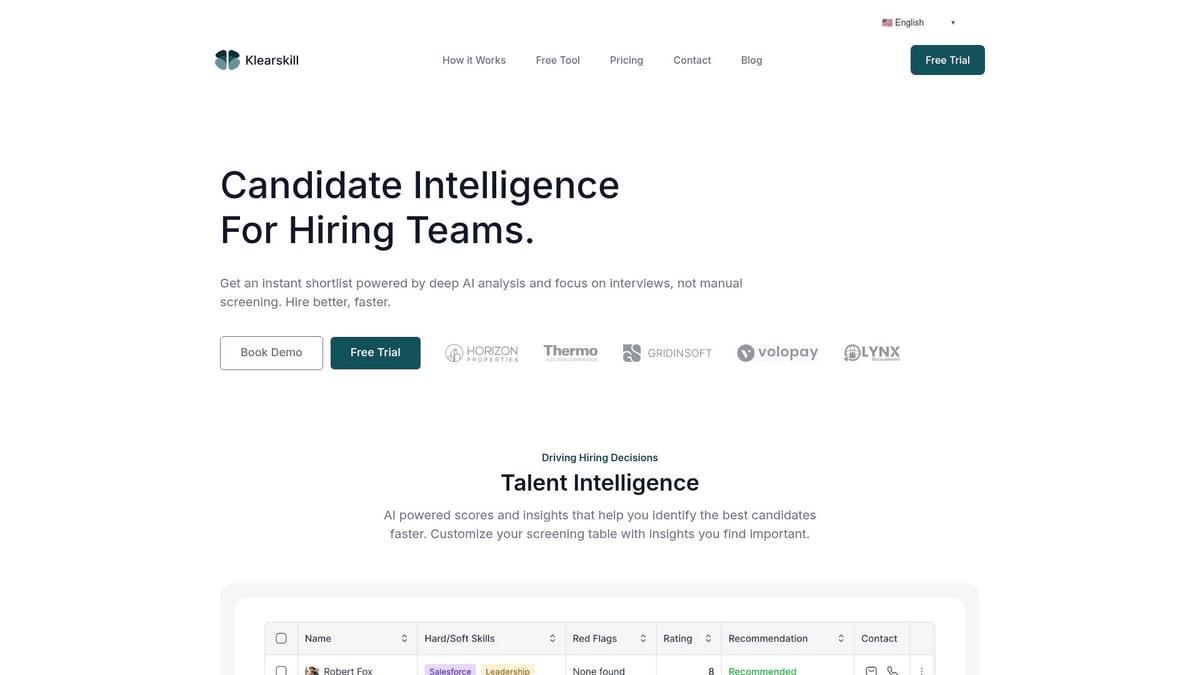
Automated skill matching ensures that only the most relevant candidates are moved forward, saving time and minimizing the risk of human bias. In fact, companies report up to a 92 percent reduction in screening time and a 99 percent decrease in bias during the search for candidates when using AI driven tools.
Integration with existing applicant tracking systems allows for seamless workflow management. Recruiters can set up customizable AI scoring models, enabling data driven shortlisting and more objective decision making. Advanced analytics further empower teams to track search for candidates effectiveness and continuously optimize their strategies.
These innovations mean organizations can quickly adapt to changing talent needs while maintaining a competitive edge. As AI continues to evolve, the search for candidates will become even more strategic, targeted, and impactful.
Sourcing Candidates: Internal, External, and Passive Talent Pools
The ability to search for candidates efficiently is a critical advantage for recruiters in 2026. As competition for top talent grows, relying on a single channel is no longer sufficient. Instead, successful organizations build robust talent pipelines by strategically combining internal, external, and passive candidate sources.

Internal talent pipelines have become a powerful source when you search for candidates. Advanced applicant tracking systems now enable recruiters to segment employees by skill, performance, and career goals. Features such as internal mobility portals and talent rediscovery tools help uncover "silver medalists"—those who previously reached final interview stages but were not hired. Companies that promote from within benefit from reduced hiring costs and faster onboarding. For example, organizations using structured internal sourcing have seen time-to-fill decrease by up to 30 percent, while boosting engagement among existing employees.
External sources remain essential for expanding reach when you search for candidates. Job boards, professional networks like LinkedIn, and niche community forums allow recruiters to tap into broader talent pools. Leading platforms now offer smart filtering and programmatic job advertising to target the right candidates. Employee referral programs, supported by digital tracking and reward systems, deliver high-quality hires at a lower cost. According to recent industry data, referred candidates are 55 percent faster to hire and are more likely to stay with the company for over two years.
Engaging passive talent is a key differentiator in a modern search for candidates strategy. Passive candidates are professionals not actively seeking new roles but who may be open to opportunities. Recruiters use personalized messaging, nurture campaigns, and employer branding to capture their interest. AI-powered platforms can identify potential fits based on social profiles and recent career changes, allowing for timely, relevant outreach. Building relationships with passive candidates ensures a continuous flow of qualified prospects, even before a role is posted.
To maximize results, organizations must combine these channels into a cohesive approach to search for candidates. Regularly auditing internal databases, optimizing job postings, and leveraging advanced sourcing tools all contribute to a higher quality pipeline. For a comprehensive overview of effective methods, consult these proven candidate sourcing strategies to refine your approach and stay ahead of the competition.
Ultimately, the most successful search for candidates leverages both technology and human insight. By continuously evolving sourcing practices and maintaining strong engagement across internal, external, and passive talent pools, recruiters can reduce time-to-hire, lower costs, and secure the best talent for the future.
Streamlining Candidate Sorting, Evaluation, and Shortlisting
In the modern recruitment landscape, efficiently managing the results of your search for candidates is essential for building a high-performing team. Once your search for candidates delivers a pool of potential hires, the next challenge is to sort, evaluate, and shortlist them quickly and objectively. Recruiters must balance speed with accuracy, making sure the best talent is highlighted without overlooking hidden gems.
Sorting candidates starts with clear criteria. Most applicant tracking systems allow you to organize candidates by workflow status, source, application date, or recruiter rating. Using these filters after a search for candidates helps prioritize those who meet your immediate needs. By leveraging customizable columns and quick-view options, you can compare candidate profiles side by side, ensuring that no promising applicant is missed. This approach is especially useful for recurring roles or high-volume recruitment.
Collaboration is vital during the evaluation phase. Many platforms provide shared notes and comment features, allowing hiring teams to discuss candidate strengths and concerns in real time. This streamlines decision-making and ensures alignment among stakeholders after every search for candidates. Assigning candidates to specific reviewers or interviewers based on expertise further speeds up the process and improves the quality of feedback.
Resume parsing and bulk actions are game changers for high-volume hiring. Advanced resume parsing tools extract key skills, education, and experience details, making it easier to compare candidates directly from the results of your search for candidates. Bulk actions, such as advancing, archiving, or emailing multiple candidates, save significant time. In fact, more than 51 percent of recruiters reported a strongly positive impact on productivity after adopting AI-driven sorting and evaluation tools, according to AI's Impact on Recruitment Productivity.
Managing candidates across multiple jobs and workflow stages can get complex. It's important to keep your database organized by tagging candidates with relevant roles, skills, or project names. Set clear naming conventions and regularly update candidate statuses to avoid confusion. Leading platforms offer visual dashboards and search history logs, giving recruiters a clear overview of where each candidate stands. These features ensure that every search for candidates remains structured, transparent, and effective, supporting faster and more confident shortlisting decisions.
Future-Proofing Your Candidate Search Strategy for 2026 and Beyond
The pace of change in recruitment technology is accelerating, making it essential for organizations to future-proof their approach to search for candidates. As talent markets become more global and competitive, recruiters must adapt to new tools, trends, and expectations to stay ahead.
Emerging technologies are transforming every step of the search for candidates. Predictive talent analytics now enable recruiters to anticipate hiring needs, forecast turnover, and identify high-potential candidates before roles even open. Conversational AI is reshaping candidate engagement, providing real-time responses and nurturing relationships at scale. According to recent research, 87 percent of companies already use AI in their hiring processes, a figure expected to rise as organizations prioritize efficiency and quality of hire. For example, platforms like Paradox use conversational AI to streamline recruitment, improving both recruiter productivity and candidate experience. Learn more about AI Adoption in Recruitment Processes and how AI's Role in Candidate Experience is evolving.
Another key trend is the growing importance of diversity, equity, and inclusion in the search for candidates. Modern search algorithms are being refined to minimize bias, ensure fair evaluation, and support diverse hiring goals. Recruiters must prioritize tools that offer transparent, explainable AI and customizable filters to align with DEI objectives. Embedding DEI metrics into search workflows not only improves compliance but also helps organizations attract a broader, more qualified talent pool.
Selecting recruitment solutions that scale and adapt is critical for future-proofing your search for candidates. Look for platforms with robust integration capabilities, support for multi-language search, and the flexibility to evolve with changing business needs. Leading organizations are now connecting candidate search directly with broader talent intelligence and workforce planning platforms to gain a holistic view of skills, gaps, and opportunities.
Real-world examples show that companies investing in continuous learning and technology adoption are best positioned to thrive. These organizations regularly audit their processes, stay informed of industry advancements, and adjust their strategies to meet shifting candidate expectations. Projections indicate that by 2026, most candidates will expect personalized engagement, rapid feedback, and transparent evaluation throughout the hiring journey.
To remain competitive, prioritize a proactive approach to search for candidates, embracing innovation, data-driven insights, and inclusive practices. By future-proofing your strategy today, you set the foundation for building resilient, high-quality talent pipelines in the years ahead.
After exploring these expert strategies for searching and sourcing candidates in 2026, you can see how vital it is to leverage the right technology for efficient and unbiased hiring. Imagine streamlining your recruitment process with AI that analyzes CVs, ranks candidates instantly, and delivers a shortlist in moments—freeing you to focus on building genuine connections and making confident decisions. If you’re ready to put these strategies into action and experience the future of candidate search firsthand, I encourage you to Start free trial and see how AI can transform your hiring outcomes.


