
March 1, 2026
Best Candidate for a Job: How to Identify Top Talent
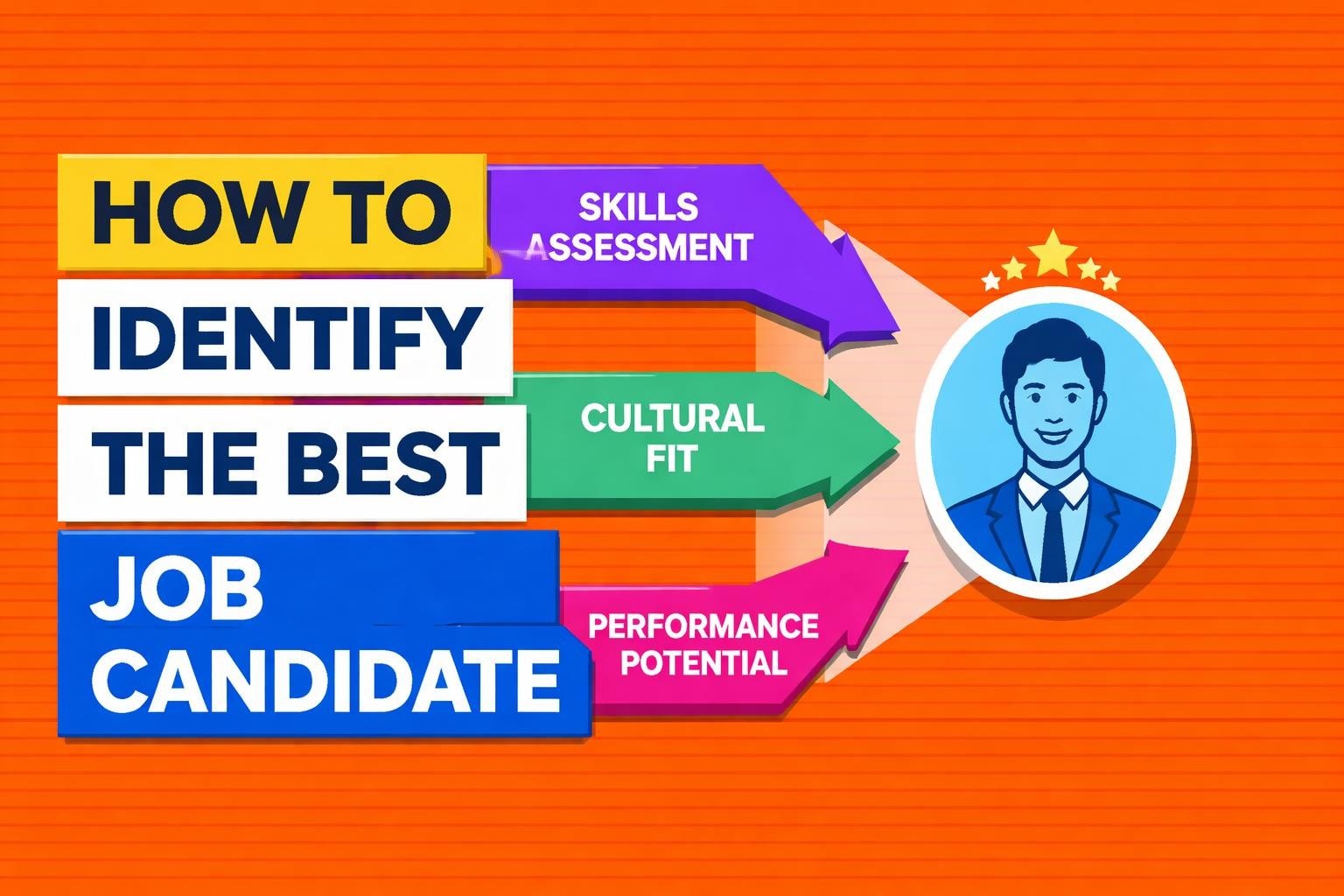
Finding the best candidate for a job represents one of the most critical challenges facing recruiters and hiring managers in 2026. The difference between an adequate hire and an exceptional one can transform team performance, drive innovation, and significantly impact organizational success. With talent markets remaining competitive and the cost of bad hires continuing to rise, organizations need systematic approaches that combine human insight with technological advancement to consistently identify top performers who will thrive in their roles and contribute meaningfully to company objectives.
Understanding What Makes the Best Candidate
The concept of the best candidate for a job extends far beyond matching skills listed on a resume to requirements in a job description. Top candidates demonstrate a unique combination of technical competence, cultural alignment, growth potential, and proven ability to deliver results in environments similar to what they will encounter. Research shows that high performers can be up to 400% more productive than average employees in complex roles, making the identification process crucial for business success.
When evaluating candidates, recruiters must consider multiple dimensions simultaneously. Technical skills form the foundation, but soft skills such as communication, adaptability, and problem-solving often determine long-term success. The competency-based recruitment approach focuses on candidates' ability to demonstrate specific competencies through structured interviews and practical assessments, providing a more reliable prediction of future performance than traditional methods.
Modern recruitment increasingly relies on data-driven methods to reduce bias and improve selection accuracy. AI tools for talent acquisition can analyze thousands of data points across candidate profiles, identifying patterns that correlate with high performance while removing human biases that often cloud judgment. This technological support enables recruiters to focus their expertise on nuanced evaluations that machines cannot yet replicate.
Defining Role-Specific Success Criteria
Before beginning any candidate search, organizations must clearly define what success looks like in the specific role. Generic job descriptions produce generic results. The best candidate for a job in sales differs fundamentally from the ideal engineering hire, even within the same organization. Success criteria should encompass both quantifiable metrics and qualitative characteristics that align with team dynamics and company values.
Start by analyzing top performers currently in similar roles. What behaviors distinguish them from average contributors? What skills do they leverage most frequently? What personality traits enable them to navigate challenges effectively? This analysis creates a benchmark against which candidates can be measured objectively.
According to Forbes experts, evaluating skills, cultural fit, and potential for growth represents three key strategies for identifying the best person for any role. These elements form an interconnected framework where strength in one area cannot fully compensate for significant deficiencies in another.
Document these criteria explicitly before reviewing any applications. This practice prevents the common mistake of adjusting standards based on available candidates rather than actual role requirements. Clear criteria also facilitate more objective discussions during hiring committee meetings, reducing the influence of personal preferences that may not correlate with job performance.
Leveraging Pre-Hire Assessments Effectively
Pre-hire assessments provide valuable data points that complement traditional interviews and resume reviews. These tools range from cognitive ability tests and technical skill evaluations to personality inventories and situational judgment tests. When properly designed and validated, assessments predict job performance more accurately than unstructured interviews alone.
The key to effective assessment use lies in selecting tools that measure characteristics genuinely relevant to role success. A personality test designed for customer service positions may prove irrelevant or even counterproductive when hiring software developers. Work with industrial-organizational psychologists or rely on validated assessment platforms that have demonstrated predictive validity for specific job categories.
Assessments work best when integrated into a comprehensive evaluation process rather than serving as standalone gatekeepers. Combine quantitative assessment scores with qualitative interview insights and practical work samples to build a complete picture of each candidate's capabilities. This multi-method approach compensates for the limitations inherent in any single evaluation technique.
Transparency about assessment use builds candidate trust and improves the applicant experience. Explain what you are measuring and why it matters for role success. Candidates appreciate understanding how their skills align with position requirements, and this clarity helps both parties make informed decisions about mutual fit.
Implementing Structured Interview Processes
Unstructured interviews where different candidates receive different questions undermine comparison and introduce substantial bias. The best candidate for a job might be overlooked simply because they received more challenging questions or encountered an interviewer having a difficult day. Structured interviews where every candidate answers identical core questions in the same order dramatically improve selection accuracy.
Develop interview questions that probe specific competencies identified in your success criteria. Behavioral questions asking candidates to describe how they handled past situations generally predict future performance better than hypothetical questions about what they might do. Past behavior represents the most reliable indicator of future behavior in similar circumstances.
The Muse highlights how cognitive biases trick hiring managers into selecting suboptimal candidates. Structured interviews with standardized evaluation rubrics counteract these biases by forcing interviewers to justify their assessments against predetermined criteria rather than vague impressions.
Train all interviewers on proper technique before they participate in candidate evaluations. Consistency across interviewers matters just as much as consistency in questions asked. Provide scoring guides that define what strong, moderate, and weak responses look like for each question. This preparation ensures that candidate scores reflect actual performance differences rather than varying interviewer standards.
Analyzing Resumes and Applications with Precision
Traditional resume review consumes enormous time while often missing top candidates buried in large applicant pools. Human reviewers suffer from fatigue, unconscious bias, and limited capacity to process information consistently across hundreds of applications. Resume screening software addresses these limitations by applying consistent criteria to every application while highlighting candidates whose qualifications most closely match role requirements.
Advanced systems now use natural language processing to understand context and nuance in candidate materials. Rather than simple keyword matching, modern platforms assess the depth of experience, progression in responsibilities, and relevance of accomplishments to the target role. This sophisticated analysis identifies the best candidate for a job even when their background takes a non-traditional path to acquiring relevant expertise.
When reviewing applications manually, establish a systematic process that evaluates every resume against the same criteria in the same sequence. Create a scorecard that assigns points for must-have qualifications, preferred skills, and relevant experience. This structured approach prevents the common pitfall of making snap judgments based on where candidates attended school or their first employer.
Pay particular attention to career progression and demonstrated impact rather than just titles and company names. A candidate who consistently earned promotions and expanded responsibilities at lesser-known organizations may represent a stronger hire than someone who held static roles at prestigious companies. Look for evidence of initiative, learning agility, and tangible contributions to business objectives.
Recognizing Cultural Fit Without Homogeneity
Cultural fit represents one of the most misunderstood concepts in hiring. Too often, organizations confuse fit with similarity, selecting candidates who share backgrounds, interests, and perspectives with current team members. This approach produces homogeneous teams that lack the diverse viewpoints necessary for innovation and adaptability.
The best candidate for a job aligns with core organizational values while bringing unique perspectives that challenge assumptions and drive improvement. Focus on fundamental principles such as work ethic, communication style, approach to collaboration, and attitude toward feedback rather than surface-level characteristics. A candidate who shares your commitment to customer service excellence but approaches problems differently than current team members often delivers more value than someone who simply mirrors existing team dynamics.
Assessment of cultural fit should remain as structured and evidence-based as evaluation of technical skills. Define your culture explicitly through observable behaviors and decision-making principles rather than vague descriptions. Then probe how candidates have demonstrated alignment with these principles in previous roles through specific examples and situations.
Once hired, performance management tools like Hatchproof help organizations track whether new employees truly fit the team environment and identify potential misalignment early. These AI-driven insights enable proactive intervention to address concerns before they lead to turnover, maximizing the return on your hiring investment.
Evaluating Growth Potential and Learning Agility
Past performance predicts future performance primarily when job demands remain relatively stable. In rapidly evolving industries and roles, the ability to learn and adapt often matters more than existing knowledge. The best candidate for a job in 2026 may need to master technologies and methodologies that do not yet exist, making learning agility a critical selection criterion.
Assess learning agility by exploring how candidates have navigated significant changes in their careers. Ask about times they needed to acquire new skills quickly, adapt to different work environments, or solve problems outside their areas of expertise. Listen for evidence of curiosity, resilience in the face of setbacks, and systematic approaches to skill development.
Academic credentials and certifications provide some indication of learning capability, but practical demonstrations carry more weight. Consider incorporating learning exercises into your interview process where candidates receive new information and must apply it to solve a problem or make a recommendation. Their approach to this challenge reveals more about learning agility than any question about past experiences.
The Academy to Innovate HR emphasizes prioritizing cultural fit alongside structured interviews as best practices for recruiting top talent. These elements combine to create a selection process that identifies candidates who will succeed not just initially but throughout their tenure as role demands evolve.
Verifying Claims Through Reference Checks
Reference checks often feel like formalities conducted after hiring decisions have essentially been made. This approach wastes a valuable opportunity to validate candidate claims and gain insights into how they actually perform in professional settings. When conducted properly, reference conversations reveal patterns that predict success or highlight red flags that warrant further investigation.
Structure reference checks just as carefully as interviews. Prepare specific questions tied to competencies and concerns that emerged during earlier evaluation stages. Rather than asking whether the reference would rehire the candidate, explore concrete situations where the candidate demonstrated particular skills or faced specific challenges relevant to your role.
The Topgrading methodology emphasizes extensive interviews and thorough reference checks as essential components of identifying high-performing candidates. This comprehensive approach treats references as a critical data source rather than a checkbox exercise, recognizing that patterns across multiple references provide valuable predictive information.
Consider going beyond the references candidates provide to speak with other individuals who worked with them. While this requires candidate permission and careful execution to avoid impropriety, conversations with peers and indirect reports often yield more candid assessments than discussions with hand-selected references.
Using Data and AI to Enhance Decision-Making
The volume of applications for many positions exceeds what humans can thoroughly evaluate within reasonable timeframes. AI-powered recruitment tools enable organizations to maintain rigorous standards even when screening hundreds or thousands of candidates. These systems identify the best candidate for a job by analyzing patterns across successful hires and measuring how well each applicant matches those patterns.
Modern recruitment platforms employ machine learning algorithms trained on historical hiring data to predict candidate success probability. These systems consider far more variables than human reviewers can track, identifying subtle patterns that correlate with performance. Recent research on candidate ranking using BERT demonstrates how advanced AI can match candidates to job descriptions with increasing sophistication.
However, AI should augment rather than replace human judgment. Algorithms excel at narrowing large applicant pools to qualified shortlists but lack the nuanced understanding necessary for final selection decisions. The optimal approach combines AI resume screening to identify promising candidates with structured human evaluation to assess subtle fit factors that remain beyond current algorithmic capabilities.
Transparency about AI use builds candidate trust and ensures legal compliance. Explain how automated systems support your process without making final decisions autonomously. Regular audits of AI tools help identify and correct any biases that may emerge in algorithmic recommendations, ensuring fair treatment across all demographic groups.
Avoiding Common Selection Pitfalls
Even well-designed hiring processes fall victim to predictable mistakes that lead to suboptimal selections. Awareness of these pitfalls represents the first step toward avoiding them. The halo effect, where strength in one area creates an assumption of overall excellence, frequently leads hiring managers to overlook significant weaknesses in candidates who excel in visible dimensions like presentation skills or prestigious credentials.
Similarly, recency bias causes recent interviews to weigh more heavily than earlier ones unless teams maintain careful documentation of all candidate interactions. The best candidate for a job interviewed in the first week may be forgotten by the time decisions occur three weeks later if their performance was not thoroughly documented using structured evaluation forms.
Pressure to fill positions quickly often compromises selection standards. Organizations rationalize hiring adequate candidates rather than waiting for excellent ones, telling themselves that someone in the seat beats an empty position. Research consistently shows this thinking produces costly mistakes as poor performers require management attention, damage team morale, and eventually need replacement, extending time-to-productivity far beyond what waiting for better candidates would have required.
The concept of personality hires, where candidates are selected based on personality traits rather than technical skills, can work in specific circumstances but often reflects inadequate assessment of role requirements. While personality matters, it should complement rather than substitute for competence verification.
Building Consensus Among Hiring Stakeholders
Most hiring decisions involve multiple stakeholders with different perspectives and priorities. The hiring manager focuses on immediate team needs, human resources emphasizes policy compliance and long-term fit, and senior leadership considers strategic alignment. The best candidate for a job must satisfy all these perspectives while excelling against objective performance criteria.
Structure hiring committee discussions to prevent dominant personalities from overriding collective judgment. Have each participant independently score candidates against predetermined criteria before group discussion begins. This practice ensures that everyone's assessment receives consideration rather than allowing the first speaker to anchor the conversation.
When disagreement emerges, return to documented evidence from interviews, assessments, and references rather than debating impressions or feelings. Ask dissenting voices to identify specific concerns tied to success criteria. Often, disagreements reflect different weighting of criteria rather than fundamentally different candidate assessments, and these differences can be resolved through structured discussion.
Create clear decision-making processes before beginning candidate evaluation. Determine whether hiring managers have final authority or whether decisions require consensus. Establish tie-breaking procedures and define circumstances that warrant rejecting all candidates and reopening the search. These pre-determined processes prevent delays and conflicts when facing difficult choices between closely matched finalists.
Measuring and Improving Your Selection Process
Organizations serious about consistently identifying the best candidate for a job measure their hiring effectiveness and continuously refine their processes. Track metrics including time-to-hire, offer acceptance rates, new hire performance ratings, retention at key intervals, and hiring manager satisfaction. These measurements reveal whether your process actually identifies high performers or simply fills positions.
Conduct post-hire analyses comparing candidate evaluation scores with actual job performance. Which assessment components most accurately predicted success? Which interview questions yielded the most useful information? This analysis enables ongoing refinement, strengthening predictive elements while eliminating ineffective components.
Survey candidates about their experience regardless of hiring outcomes. Top talent has choices, and organizations with efficient, respectful processes gain competitive advantage in attracting the best candidate for a job. Candidate feedback often highlights friction points invisible to internal teams, such as slow communication, unclear expectations, or unnecessarily burdensome application requirements.
Benchmark your practices against industry standards and emerging best practices. Recruitment automation continues advancing, and organizations that fail to adopt proven innovations lose ground to competitors who leverage these tools effectively. However, automation should enhance rather than replace the human elements that build relationships and assess nuanced fit factors.
Identifying the best candidate for a job requires systematic processes that combine structured evaluation methods with advanced technology to assess technical skills, cultural alignment, and growth potential objectively. Organizations that implement rigorous selection frameworks while avoiding common biases consistently build high-performing teams that drive business success. Klearskill helps recruiters make these critical decisions with confidence by using AI to analyze candidate CVs and rank applicants, delivering qualified shortlists in moments so you can focus your expertise on the final selection decisions that truly require human judgment.


