
January 7, 2026
Job Description for Talent Acquisition: The 2026 Success Guide

Talent acquisition is transforming at a remarkable pace as technology, global competition, and workforce expectations shift. In 2026, organizations know that a strong job description for talent acquisition roles is the key to standing out and capturing high-performing professionals.
This guide will equip HR leaders and recruiters with the latest strategies to create job descriptions that attract and retain top talent. You will discover how responsibilities are evolving, which skills are now essential, and why integrating technology is a must.
Ready to future-proof your hiring approach? Let’s explore the actionable steps and insights that will ensure your job description for talent acquisition secures the best candidates in a rapidly changing landscape.
The Evolving Landscape of Talent Acquisition in 2026
The world of talent acquisition is experiencing a profound transformation as organizations adapt to rapid technological advancements and shifting workforce expectations. The job description for talent acquisition roles is no longer static, reflecting new demands driven by globalization, digital innovation, and the urgent need for adaptable, high-performing teams.
Remote work and global talent pools have become integral to recruitment strategies, requiring talent acquisition professionals to rethink traditional boundaries. As companies compete for top candidates, the job description for talent acquisition must capture evolving responsibilities, integrate new technologies, and emphasize critical skills for the future.

Key Trends Shaping Talent Acquisition Careers
The job description for talent acquisition now centers on adaptability and digital fluency. Remote-first hiring models have redefined access to talent, enabling organizations to source candidates from diverse locations. Skills-based recruitment is replacing traditional degree-based requirements, emphasizing practical expertise and continuous learning.
Artificial intelligence and predictive analytics are now foundational to recruitment processes. According to recent insights from Gartner, AI-driven automation and cost pressures are top forces shaping talent acquisition in 2026. This shift is reflected in the modern job description for talent acquisition, where proficiency with digital tools and an understanding of data-driven strategies are essential.
Generational changes are also influencing expectations. As Gen Z enters the workforce, candidates seek transparency, flexibility, and a strong employer value proposition. Employer branding has become a strategic function, with organizations investing in authentic communication and reputation management to attract talent.
The integration of AI, automation, and analytics is not only changing how roles are filled, but also what is expected from those in the field. The job description for talent acquisition must now include digital literacy and the ability to leverage technology for better outcomes, as highlighted in the AI revolution and cost pressures driving talent acquisition trends.
New Challenges and Opportunities
As organizations face persistent talent shortages and an increasingly competitive labor market, the job description for talent acquisition professionals must reflect new realities. SHRM and LinkedIn data show that many industries are experiencing a scarcity of skilled candidates, intensifying the need for creative sourcing and engagement strategies.
Global competition means recruiters must move quickly, balancing speed with quality. The job description for talent acquisition should highlight the importance of building strong talent pipelines and leveraging diverse channels to reach passive candidates. Leading organizations are redefining their talent acquisition teams, embedding them as strategic partners within HR and business leadership.
Opportunities are emerging for talent acquisition professionals to add value through technology adoption and improved candidate experience. Organizations investing in data-driven recruitment and advanced analytics are seeing measurable improvements in hiring efficiency and employee retention. The most effective job description for talent acquisition now includes adaptability, a commitment to continuous learning, and a proactive approach to diversity, equity, and inclusion.
Collaboration across departments is more critical than ever, ensuring alignment with organizational goals and fostering a culture of innovation. As the landscape evolves, those who embrace change and invest in professional development will be best positioned to succeed in the future of talent acquisition.
Core Responsibilities in a Modern Talent Acquisition Job Description
The core responsibilities outlined in a modern job description for talent acquisition reflect sweeping changes in how organizations compete for top talent. No longer limited to transactional hiring, today's talent acquisition professionals play a strategic role in shaping workforce success. As the landscape evolves, job descriptions must capture a blend of proactive sourcing, candidate advocacy, data-driven decision making, and an unwavering commitment to diversity and compliance.
These responsibilities form the backbone of a future-ready talent acquisition function, ensuring organizations can attract, engage, and retain high-caliber candidates in a dynamic marketplace.

Strategic Talent Sourcing and Pipeline Development
A robust job description for talent acquisition places significant emphasis on proactive sourcing and long-term pipeline development. Rather than waiting for candidates to apply, leading professionals map the talent landscape and build connections with high-potential individuals well before roles become available.
Sourcing strategies now extend across digital and social platforms, professional communities, and targeted outreach. Employee referral programs are cultivated as ongoing channels for talent, ensuring a continuous influx of qualified prospects.
Top organizations invest in talent communities, nurturing engagement with passive candidates and keeping their employer brand front-of-mind. According to recent industry insights, companies that prioritize these sourcing strategies consistently reduce time-to-fill and improve candidate quality.
For practical approaches, see how Candidate Sourcing Strategies can be integrated into a job description for talent acquisition. By detailing responsibilities such as talent mapping, relationship building, and maintaining active pipelines, organizations set clear expectations for strategic sourcing excellence.
Candidate Experience and Employer Branding
Another pillar of an effective job description for talent acquisition is the commitment to creating outstanding candidate experiences. The candidate journey extends from first contact through onboarding, with every interaction shaping perceptions of the employer brand.
Modern talent acquisition professionals guide candidates through transparent, respectful, and engaging processes. They communicate promptly, provide feedback, and ensure every touchpoint reflects organizational values.
Employer branding has become a strategic function, with professionals expected to be brand ambassadors who convey organizational culture with authenticity. Research shows that a positive candidate experience directly correlates with higher offer acceptance rates and long-term retention.
To stay competitive, a job description for talent acquisition should specify responsibilities such as candidate journey mapping, brand storytelling, and collaborating with marketing teams to amplify the employer value proposition. These elements help organizations attract talent that aligns with their mission and values.
Data-Driven Recruitment and Analytics
Data is at the heart of every forward-thinking job description for talent acquisition. The ability to leverage recruitment analytics, generate actionable insights, and make evidence-based decisions is now a fundamental requirement.
Modern talent acquisition teams track key performance indicators such as time-to-fill, source effectiveness, candidate quality, and offer acceptance rates. They use applicant tracking systems and analytics platforms to identify trends and optimize processes.
Reporting and data visualization skills are increasingly sought after, enabling professionals to present findings to stakeholders and drive continuous improvement. Organizations that embed data-driven recruitment into their job description for talent acquisition see measurable gains in efficiency and quality of hire.
By specifying responsibilities like metrics tracking, analytics reporting, and process optimization, companies ensure their talent acquisition function is equipped for an analytical, results-oriented future.
Diversity, Equity, and Inclusion Initiatives
A modern job description for talent acquisition must make diversity, equity, and inclusion central to every stage of the recruitment process. Organizations are expected to embed DEI into sourcing, assessment, selection, and onboarding.
Talent acquisition professionals partner with leadership to define measurable DEI goals and ensure compliance with evolving labor laws. They design inclusive job postings, remove bias from screening processes, and champion equitable candidate experiences.
Recent research highlights that companies with strong DEI initiatives not only attract a broader talent pool but also outperform peers in innovation and employee engagement. For measurable impact, a job description for talent acquisition should include responsibilities such as designing inclusive hiring practices, tracking DEI metrics, and conducting regular compliance reviews.
This focus ensures organizations build workforces that reflect the diversity of their customers and communities.
Essential Skills and Qualifications for Talent Acquisition Roles
In 2026, the skills required for success in talent acquisition are more dynamic than ever. The job description for talent acquisition professionals must reflect both core abilities and emerging competencies, ensuring organizations attract forward-thinking candidates. As the landscape evolves, so do expectations for technical mastery, relationship building, adaptability, and ethical standards.

Technical and Analytical Skills
Technical and analytical proficiency is now foundational in every job description for talent acquisition. Mastery of applicant tracking systems, digital sourcing tools, and recruitment analytics platforms is essential. As companies adopt AI-powered solutions, professionals must demonstrate comfort with automation, data parsing, and digital workflows.
Certifications in HR technology, such as advanced ATS or recruitment marketing tools, are highly regarded. Data-driven decision-making is at the core of modern hiring, so fluency in interpreting metrics like time-to-fill, quality-of-hire, and pipeline diversity is critical.
Experience with predictive analytics and familiarity with emerging platforms further differentiate top performers. Candidates who can leverage technology to streamline processes and enhance outcomes are in high demand. Every job description for talent acquisition should specify these digital expectations, reflecting the central role of analytics and tech tools in the hiring process.
Soft Skills and Relationship Management
The ability to build trust, communicate clearly, and manage relationships is indispensable for talent acquisition professionals. Every job description for talent acquisition needs to highlight communication, negotiation, and stakeholder management as core skills.
Empathy and active listening enable recruiters to understand candidate motivations and business needs. Collaboration with hiring managers, executives, and cross-functional teams requires diplomacy and adaptability. Effective relationship management ensures a positive candidate experience and strengthens employer branding.
Scenarios such as navigating difficult conversations or resolving conflicts with tact showcase the importance of soft skills. Recruiters who excel in these areas create lasting connections and drive strategic impact within their organizations.
Continuous Learning and Professional Development
Continuous learning is a hallmark of high-performing talent acquisition teams. In an era of rapid change, the job description for talent acquisition should emphasize the value of ongoing education, industry certifications, and upskilling. Professionals are expected to stay ahead of recruitment trends, experiment with new tools, and adopt innovative practices.
Access to learning platforms and industry events allows recruiters to broaden their expertise and remain competitive. The shift toward skills-based hiring and lifelong learning is highlighted in recent research on skills-based hiring and continuous learning opportunities, underscoring its significance for future-ready teams.
Legal and Ethical Acumen
A comprehensive job description for talent acquisition must address legal and ethical responsibilities. Knowledge of current labor laws, privacy regulations, and equal opportunity standards is non-negotiable.
Ethical recruiting practices protect organizations from risk and ensure a fair, transparent hiring process. Staying updated on compliance requirements and integrating them into daily workflows is essential for credibility and trust. Professionals who demonstrate legal and ethical acumen are vital to maintaining organizational reputation and integrity.
Integrating Technology and AI into Talent Acquisition Job Descriptions
The modern job description for talent acquisition must do more than outline traditional recruiting tasks. As technology transforms the hiring landscape, organizations are integrating digital competencies and AI expertise into every aspect of their talent strategies. In 2026, the ability to leverage smart tools, data, and automation will set high-performing talent acquisition teams apart. This shift requires job descriptions to reflect both the technical and human elements essential for future-ready recruitment.
How AI Recruitment Platforms Like Klearskill Transform Talent Acquisition
AI recruitment platforms are revolutionizing the job description for talent acquisition by streamlining candidate screening, ranking, and shortlisting. With advanced algorithms, these platforms automate repetitive tasks, allowing recruiters to focus on building relationships and making strategic decisions. Automation not only accelerates time to hire but also reduces human bias, resulting in a fairer and more efficient process.
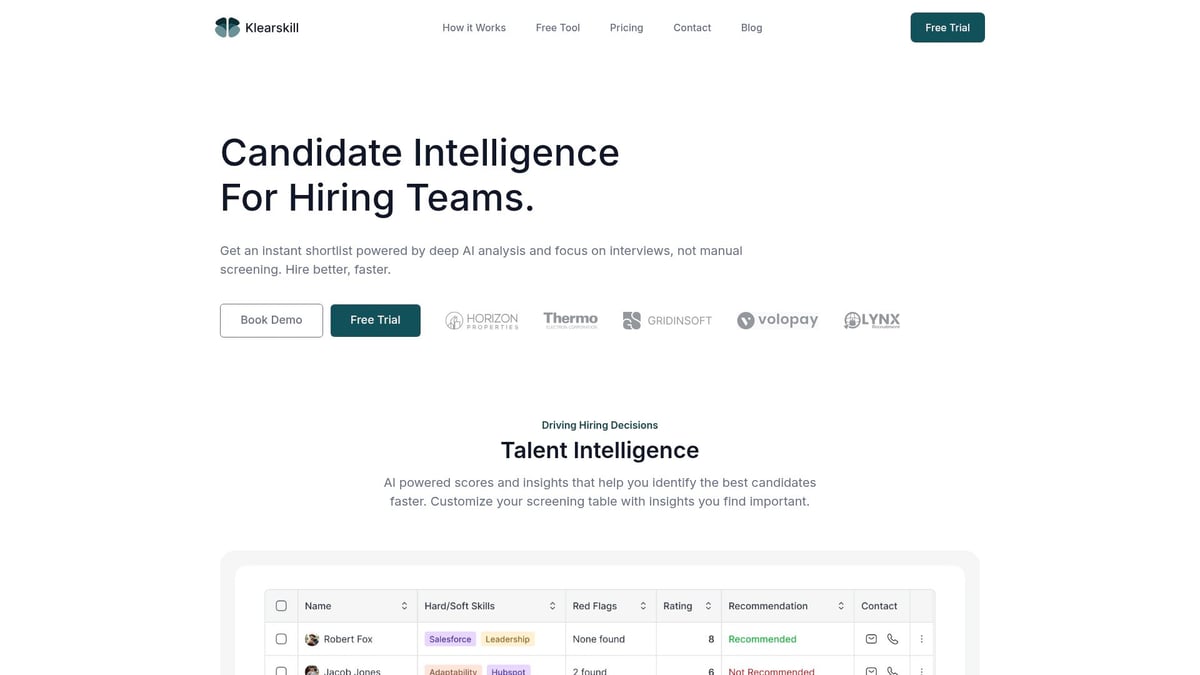
Data from leading industry sources shows that companies using AI-powered recruitment tools report significant improvements in candidate quality and hiring speed. For example, AI can rapidly analyze thousands of resumes, identify top talent based on predefined criteria, and generate actionable insights for hiring teams. This technology-driven approach is now a core expectation in the job description for talent acquisition, as hiring leaders demand professionals who can navigate sophisticated platforms and interpret complex data.
To stay competitive, organizations are seeking talent acquisition experts who understand how to harness AI for both efficiency and equity. As explored in AI for Talent Acquisition, integrating these tools into recruitment workflows leads to measurable results, from enhanced candidate experiences to stronger business outcomes. Including proficiency with AI and recruitment analytics in every job description for talent acquisition ensures teams are prepared for the demands of tomorrow’s hiring environment.
Writing Job Descriptions for a Tech-Driven TA Function
Crafting a future-focused job description for talent acquisition requires clear articulation of technology skills and digital expectations. Employers should specify familiarity with applicant tracking systems, AI-driven sourcing tools, and advanced analytics platforms. Language such as “proficiency with recruitment automation software” and “experience leveraging data-driven insights for talent decisions” signals the importance of digital fluency.
In 2026, successful job descriptions emphasize adaptability, curiosity, and a readiness to adopt emerging technologies. Candidates are expected to analyze recruitment metrics, optimize processes, and champion continuous improvement through digital solutions. By embedding these requirements, organizations attract professionals who can drive innovation and deliver strategic value.
Moreover, the job description for talent acquisition must encourage ongoing learning, as the pace of technological change accelerates. Highlighting upskilling opportunities and certification pathways demonstrates a commitment to growth and resilience. As technology becomes inseparable from recruitment, the most effective job descriptions will blend technical acuity with human-centered skills, positioning teams for sustained success in a rapidly evolving landscape.
Step-by-Step Guide to Writing the Ultimate Talent Acquisition Job Description
Crafting a winning job description for talent acquisition is essential for attracting future-ready professionals. As organizations face unprecedented change, a structured approach ensures clarity, compliance, and competitive advantage. This step-by-step guide will help you build a job description for talent acquisition that resonates with top candidates and delivers business impact.
Step 1: Define the Role and Its Strategic Impact
Begin by clearly defining the purpose of the position within your organization. Explain how the talent acquisition function supports business objectives and drives growth. Use your job description for talent acquisition to highlight the role’s influence on company culture, workforce planning, and long-term success. State how this position partners with leadership to forecast talent needs and align hiring with strategic goals. A compelling introduction sets the stage for attracting candidates who see themselves as business enablers, not just recruiters. Make sure the job description for talent acquisition positions your organization as forward-thinking and invested in talent excellence.
Step 2: Identify Core Responsibilities and Deliverables
List the primary duties the talent acquisition professional will perform. Go beyond basic recruiting tasks to include strategic activities like talent mapping, employer branding, and data analysis. The job description for talent acquisition should detail specific deliverables, such as time-to-fill targets, quality-of-hire metrics, and candidate satisfaction scores. Specify any leadership or cross-functional responsibilities, clarifying how success will be measured. When outlining expectations, use action-oriented language to convey accountability. This step ensures candidates understand the scope and impact of the role, making your job description for talent acquisition both transparent and attractive.
Step 3: Specify Required Skills, Qualifications, and Experience
Detail the essential and preferred qualifications for the role. The job description for talent acquisition should include foundational skills like communication, negotiation, and digital literacy. Highlight any required certifications, such as SHRM-CP or LinkedIn Recruiter proficiency. Clarify years of experience, industry knowledge, and familiarity with remote or global recruitment. Outline both hard and soft skills, noting adaptability and continuous learning as key assets. By providing a clear picture of what is needed, your job description for talent acquisition helps attract well-matched candidates who can excel in a rapidly evolving landscape.
Step 4: Integrate Technology and Digital Expectations
Describe the technology tools and digital competencies required in the role. The job description for talent acquisition should mention familiarity with applicant tracking systems, AI-powered sourcing platforms, and recruitment analytics. Specify expectations around data-driven decision-making and automation. Including references to Data-Driven Recruitment Strategies can reinforce the importance of analytics in modern TA functions. Use sample language such as “proficiency with AI screening tools” or “experience leveraging recruitment data for process improvement.” This clarity ensures candidates are equipped for technology-driven environments and future-ready recruitment.
Step 5: Emphasize DEI and Employer Branding
Highlight your commitment to diversity, equity, and inclusion throughout the hiring process. The job description for talent acquisition should include responsibilities related to inclusive sourcing, unbiased assessment, and promoting your employer brand. Reference measurable DEI outcomes and mention partnerships with diverse talent networks. For actionable approaches, you can draw inspiration from Diversity Hiring Strategies. Make it clear that the role is a brand ambassador, shaping both candidate experience and public perception. This emphasis attracts candidates who share your values and strengthens your organizational reputation.
Step 6: Outline Growth, Learning, and Career Pathways
Showcase opportunities for advancement and ongoing development within your organization. The job description for talent acquisition should mention structured onboarding, access to industry certifications, and mentorship programs. Outline potential career paths, such as progression to talent acquisition leadership or broader HR roles. Emphasize support for continuous learning, ensuring candidates know they will be able to grow alongside the company. By including these details, your job description for talent acquisition appeals to ambitious professionals seeking long-term success.
Step 7: Review and Optimize for Clarity and Compliance
Conduct a thorough review of the job description for talent acquisition before posting. Ensure the language is inclusive, concise, and free from bias. Check that all legal requirements and privacy regulations are met, updating content as laws evolve. Solicit feedback from current TA professionals and hiring managers to confirm accuracy and relevance. Schedule regular reviews to keep the job description for talent acquisition current with industry best practices. A well-optimized document not only attracts top talent but also protects your organization.
Future-Proofing Talent Acquisition Job Descriptions: Trends to Watch
The future of talent acquisition is unfolding rapidly, driven by technological advances and shifting workforce dynamics. Crafting a future-ready job description for talent acquisition is essential as organizations look to stay ahead in a competitive market. To remain effective, these job descriptions must reflect the latest trends and anticipate the evolving needs of both employers and candidates.
Embracing Skills-Based Hiring and Advanced Analytics
One of the most significant shifts shaping the job description for talent acquisition is the move toward skills-based hiring. Organizations are placing less emphasis on traditional degrees and more on tangible skills, competencies, and demonstrated outcomes. This trend is fueled by the increasing use of advanced analytics, which enables recruiters to assess potential based on data rather than assumptions.
As technology continues to evolve, predictive analytics and AI-driven platforms are empowering recruiters to identify, evaluate, and engage candidates with greater precision. According to AI-driven innovation in talent acquisition, integrating automation and data science into recruitment processes has become a standard expectation. These innovations not only streamline workflows but also ensure that every job description for talent acquisition is tailored to attract individuals who can thrive in data-rich environments.
Employer Value Proposition and Candidate Expectations
Modern candidates seek more than just a job; they are drawn to organizations with a compelling employer value proposition. A strong EVP signals a commitment to growth, learning, and shared values. The job description for talent acquisition must clearly communicate what makes the organization unique and why top talent should join.
In 2026, employer branding is not just a marketing function. It is woven into every stage of talent acquisition, from sourcing to onboarding. Candidates expect transparency, flexibility, and opportunities for advancement. According to Top recruitment trends and statistics for 2026, companies that articulate their EVP effectively see higher application rates and improved retention. Incorporating these elements into the job description for talent acquisition ensures alignment with the expectations of a diverse and values-driven workforce.
Remote, Hybrid Work, and Technology Evolution
The rise of remote and hybrid work models is reshaping how organizations approach talent acquisition. Flexibility is no longer a perk but a baseline expectation for many candidates. A future-proof job description for talent acquisition must reference remote collaboration tools, digital communication skills, and the ability to manage distributed teams.
Recruitment technology is also evolving, with AI, chatbots, and virtual assessments now part of daily operations. Staying ahead means continuously updating job descriptions to reflect these technological competencies. As more organizations adopt these tools, recruiters must demonstrate not only technical proficiency but also adaptability to new platforms and processes.
Practical Recommendations and Conclusion
To keep your job description for talent acquisition relevant, review and update it regularly to reflect emerging trends and technologies. Focus on clarity, inclusivity, and measurable outcomes. Highlight skills-based requirements, data literacy, and digital agility. Ensure the EVP is compelling and speaks to diverse candidate motivations.
Engage stakeholders across HR and business functions to gather feedback and align on expectations. Monitor industry reports and adapt your approach as candidate preferences and technology evolve. By proactively adjusting your job description for talent acquisition, you will attract professionals equipped to drive business success in an ever-changing landscape.
As we’ve explored, the future of talent acquisition is all about leveraging technology, data-driven insights, and a strategic approach to hiring. Crafting job descriptions that reflect these evolving demands helps you attract and retain the best talent acquisition professionals—those ready to drive your organization forward in 2026 and beyond. If you’re ready to put these insights into practice and see how AI can transform your recruitment process, why not experience it firsthand? You can streamline candidate screening and build stronger teams with innovative tools. Take the next step and Start free trial.


