
February 23, 2026
Match Recruit: AI-Powered Candidate Matching in 2026

The recruitment landscape has fundamentally shifted in 2026, with organizations demanding faster, more accurate ways to identify top talent from increasingly large applicant pools. Traditional resume screening processes that once consumed days or weeks now need to happen in moments, creating unprecedented pressure on hiring teams. The concept of match recruit technology emerges as a critical solution, leveraging artificial intelligence to analyze candidate qualifications against job requirements and deliver ranked shortlists that dramatically accelerate the hiring process. This transformation represents more than just speed gains; it fundamentally changes how recruiters approach candidate evaluation, enabling them to focus their expertise on relationship building and strategic assessment rather than manual CV review.
Understanding Match Recruit Technology
Match recruit systems represent the evolution of applicant tracking systems into intelligent talent matching platforms. These technologies parse candidate CVs, extract relevant skills and experience data, and compare this information against detailed job specifications to generate compatibility scores. The scoring algorithms consider multiple dimensions simultaneously, including technical skills, years of experience, educational background, industry exposure, and even career progression patterns.
Modern match recruit platforms utilize natural language processing to understand context beyond simple keyword matching. When a job description mentions "project management experience," sophisticated systems recognize related terms like "program coordination," "delivery leadership," or "agile scrum master" as potentially relevant qualifications. This contextual understanding prevents qualified candidates from slipping through the cracks due to vocabulary differences between their CV and the job posting.
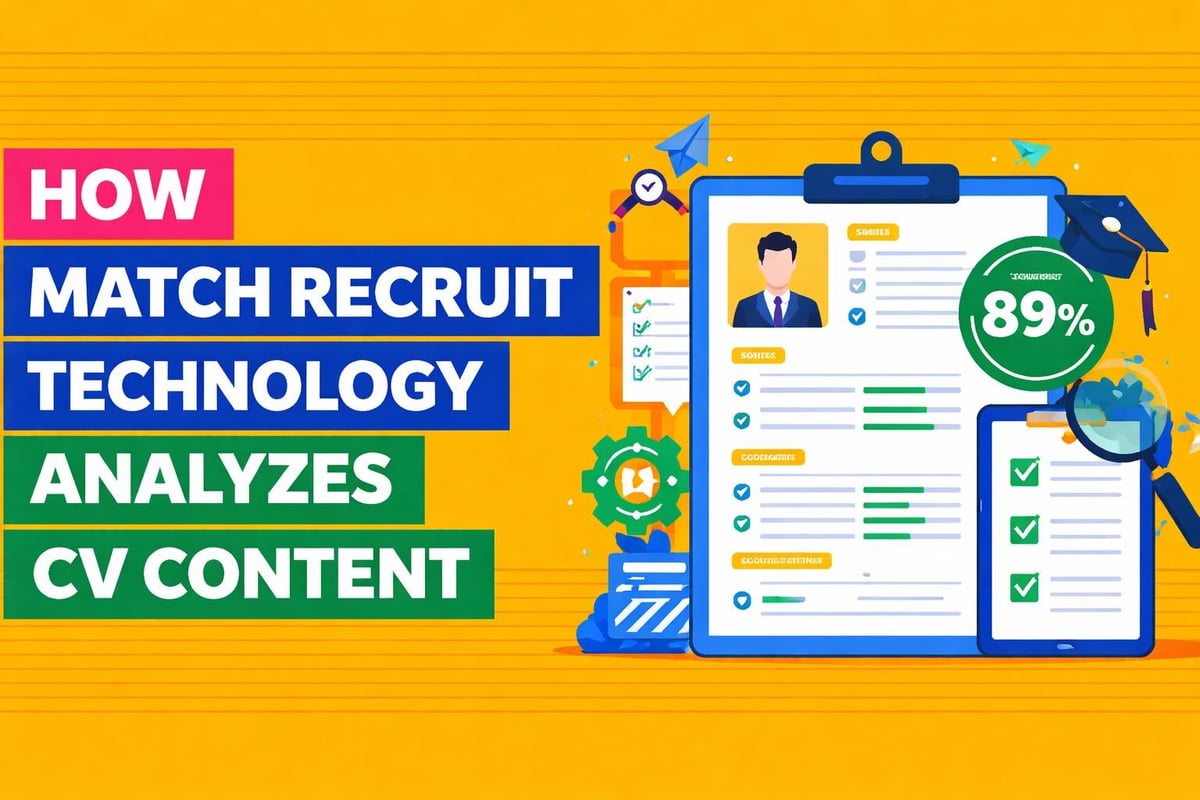
The ranking component of match recruit functionality addresses one of recruitment's most persistent challenges: prioritizing review time effectively. Rather than presenting an undifferentiated list of applicants, these systems order candidates by match quality, allowing recruiters to begin conversations with the most promising prospects immediately. This prioritization becomes particularly valuable when positions attract hundreds of applications, transforming an overwhelming task into a manageable workflow.
Organizations implementing CV screening software report substantial reductions in time-to-shortlist metrics. What previously required 15 to 20 hours of manual review now happens in minutes, freeing recruitment teams to invest their time in higher-value activities like candidate engagement, interview preparation, and hiring manager consultation.
Key Components of Effective Match Recruit Solutions
Successful match recruit implementations depend on several interconnected capabilities that work together to deliver accurate candidate rankings. The foundation begins with robust CV parsing technology that can extract structured data from diverse document formats, layouts, and languages. Poor parsing quality undermines every downstream process, making this foundational capability essential.
Skill taxonomy management forms another critical component. Effective systems maintain comprehensive databases of skills, including synonyms, related competencies, and hierarchical relationships. Understanding that Python programming relates to software development, data science, and machine learning allows systems to make intelligent connections that surface relevant candidates even when exact terminology doesn't match.
The scoring algorithm itself represents the intellectual core of match recruit technology. These algorithms must balance multiple competing factors, weighting technical requirements appropriately while also considering cultural fit indicators, career trajectory, and potential for growth. AI tools for HR have become increasingly sophisticated in this balancing act, incorporating machine learning models trained on successful hiring outcomes to refine their matching logic continuously.
Customization capabilities enable organizations to adapt match recruit systems to their specific needs. Different roles require different evaluation criteria; matching software engineers demands heavy emphasis on technical skills, while matching sales leadership positions requires greater attention to achievement metrics and industry networks. Flexible weighting systems allow recruiters to adjust the importance of various factors based on role-specific requirements.
Integration with existing recruitment workflows ensures that match recruit functionality enhances rather than disrupts established processes. Seamless connections to applicant tracking systems, calendar tools, communication platforms, and HRIS solutions create a unified technology ecosystem where candidate data flows smoothly between systems without manual re-entry or reconciliation.
Implementation Strategies for Match Recruit Systems
Organizations approaching match recruit implementation benefit from methodical planning that addresses both technical and human factors. The first step involves audit of current screening processes to establish baseline metrics around time investment, candidate quality, and hiring outcomes. These benchmarks provide the foundation for measuring improvement after implementation.
Job description optimization emerges as a surprisingly important preparation step. Match recruit systems perform best when job descriptions contain clear, specific, structured requirements. Vague descriptions that say "strong communication skills" yield less accurate matches than descriptions specifying "experience presenting technical concepts to executive audiences" or "proven ability to write detailed documentation for non-technical users." Investing time to refine job descriptions pays dividends in matching accuracy.
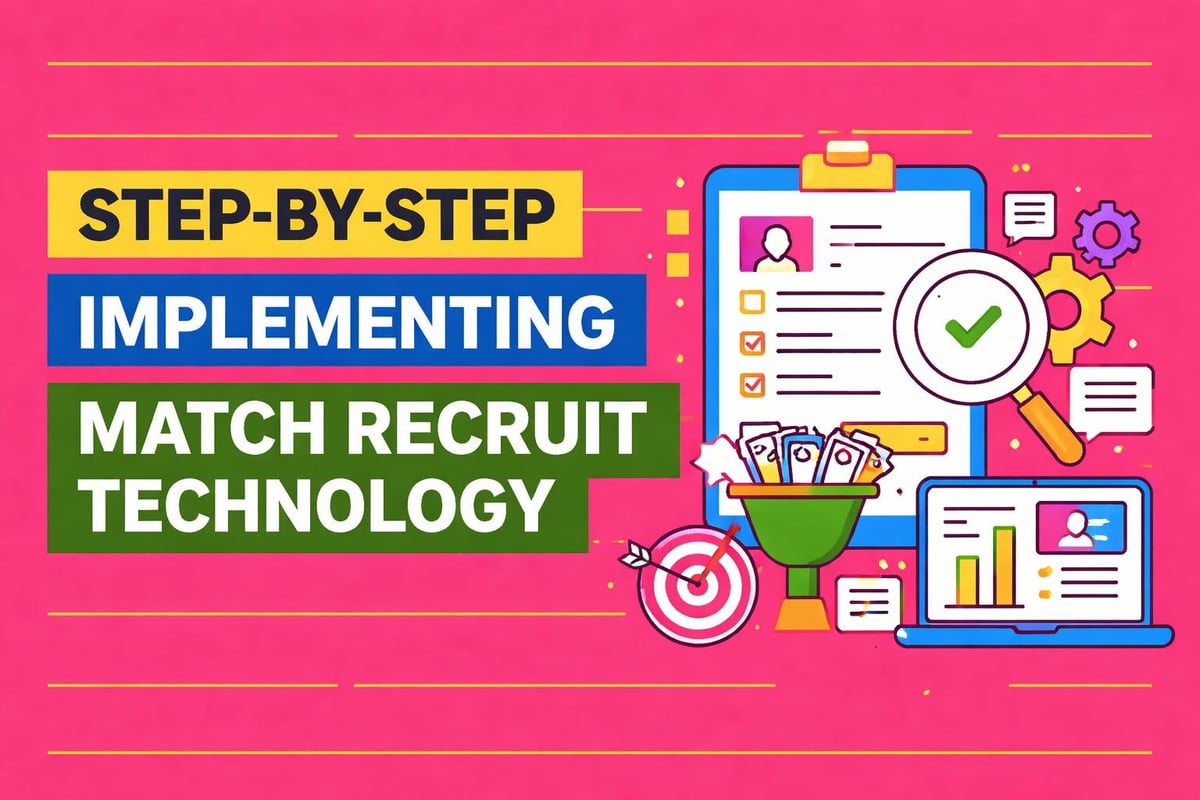
Training proves essential for maximizing value from match recruit platforms. Recruiters need to understand how scoring algorithms work, what factors influence rankings, and how to interpret match percentages. This knowledge enables them to calibrate their expectations appropriately and recognize situations where manual judgment should override algorithmic suggestions. Recruitment automation succeeds when human expertise and technological capabilities complement each other rather than operating in isolation.
Pilot programs allow organizations to test match recruit functionality on specific roles or teams before full deployment. Starting with high-volume positions where manual screening consumes substantial time demonstrates clear value and builds organizational confidence. Successful pilots create internal champions who advocate for broader adoption based on firsthand experience with improved outcomes.
Continuous refinement separates organizations that extract maximum value from those that achieve only modest improvements. Regular review of matching accuracy, analysis of false positives and false negatives, and adjustment of scoring parameters based on hiring outcomes create a virtuous cycle of improvement. According to recruiting resources from industry experts, top-performing organizations treat match recruit systems as living platforms requiring ongoing optimization rather than set-and-forget tools.
Benefits Beyond Speed in Match Recruit Adoption
While time savings represent the most immediately visible benefit of match recruit technology, organizations discover numerous additional advantages through sustained use. Quality improvements often exceed speed gains in long-term value creation. More accurate initial matching reduces the likelihood of advancing poorly suited candidates through expensive interview processes, saving both recruiter time and hiring manager effort.
Bias reduction represents another significant benefit when systems are properly configured. Human reviewers unconsciously favor candidates from familiar schools, companies, or backgrounds. Well-designed match recruit algorithms evaluate candidates based solely on specified criteria, creating more equitable initial screening. This doesn't eliminate bias completely, as algorithm design and training data can introduce their own biases, but it provides a foundation for more objective evaluation than purely manual review.
Candidate experience improvements flow from faster, more consistent communication. Match recruit systems enable recruiters to provide prompt feedback because they complete initial screening quickly. Candidates appreciate timely responses even when the answer is negative, and prompt engagement with qualified candidates reduces the risk of losing them to competing offers.
Data-driven decision making becomes possible when match recruit systems generate structured evaluation data. Organizations can analyze which candidate attributes correlate with successful hires, identify sources that consistently produce strong matches, and refine their recruitment strategies based on evidence rather than intuition. This analytical capability compounds over time as data accumulates.
Scalability represents a crucial advantage as organizations grow or face hiring surges. Manual screening capacity expands linearly with headcount; adding review capacity for 100 additional weekly applications requires proportional increases in recruiter time. Match recruit systems handle volume increases with minimal marginal cost, allowing recruitment teams to manage growth without proportional staff expansion.
Advanced Match Recruit Capabilities in 2026
The match recruit landscape has evolved significantly, with 2026 implementations offering sophisticated capabilities beyond basic CV-to-job matching. Predictive success modeling uses historical hiring data to identify subtle patterns that correlate with strong performance and retention. These models consider factors like career progression velocity, job stability patterns, and skills acquisition trajectories to forecast not just role fit but long-term success potential.
Multi-dimensional matching evaluates candidates against role requirements, team composition needs, and organizational culture characteristics simultaneously. Rather than optimizing for a single dimension, these systems balance multiple objectives, potentially ranking a candidate with 85% technical fit but excellent team diversity contribution above a 95% technical match who duplicates existing team capabilities.
Dynamic job requirement learning allows systems to refine their understanding of role requirements based on which candidates succeed in interview stages and ultimately get hired. If recruiters consistently advance candidates with certain characteristics that weren't explicitly specified in the job description, intelligent systems recognize these patterns and adjust their matching logic accordingly.
Integration with automated hiring tools creates end-to-end recruitment automation where match recruit functionality triggers subsequent workflow steps. High-ranking candidates might automatically receive screening questionnaires, scheduling invitations, or personalized outreach messages, while lower-ranking applicants receive immediate rejection notices, all without manual intervention.
Real-time matching enables proactive talent engagement. Rather than waiting for candidates to apply, advanced systems continuously scan talent pools against open requisitions, alerting recruiters when strong potential matches join the database. This shift from reactive to proactive recruitment fundamentally changes talent acquisition strategy, enabling earlier engagement with high-quality candidates.
Match Recruit Considerations for Different Organization Sizes
Small businesses face unique match recruit implementation considerations compared to enterprise organizations. Limited application volumes mean that absolute time savings may appear modest, but proportional impact remains significant when a two-person recruitment team reclaims 10 hours weekly. Cost sensitivity requires careful evaluation of pricing models, with many small organizations benefiting from applicant tracking systems designed for small businesses that include match recruit functionality within affordable monthly subscriptions.
Mid-market companies often find the strongest value proposition in match recruit technology. They handle sufficient application volume to justify investment while maintaining agility to implement new systems quickly. Their recruitment teams are large enough to benefit from efficiency gains but small enough to adopt new tools without extensive change management programs. For these organizations, match recruit capabilities often become a competitive differentiator in talent markets where they compete against both smaller companies with less sophisticated processes and larger enterprises with bigger employer brands.
Enterprise implementations present different challenges centered on integration complexity, user adoption across dispersed teams, and customization requirements for diverse roles across multiple business units. Large organizations benefit from exploring recruitment software comparison resources that evaluate enterprise-specific capabilities like multi-language support, regional compliance features, and advanced reporting requirements.
Agencies and RPOs face unique requirements because they serve multiple clients with varying needs. Their match recruit systems must support rapid configuration changes as client requirements shift, maintain strict data separation between clients, and often operate at much higher volumes than corporate recruiters. These specialized needs sometimes require purpose-built solutions rather than adapted corporate recruitment platforms.
Measuring Match Recruit Success and ROI
Establishing clear success metrics before implementation enables objective evaluation of match recruit technology value. Time-to-shortlist represents the most straightforward metric, measuring the hours required to produce a qualified candidate list for hiring manager review. Organizations typically track this metric by role type, as different positions present varying levels of screening complexity.
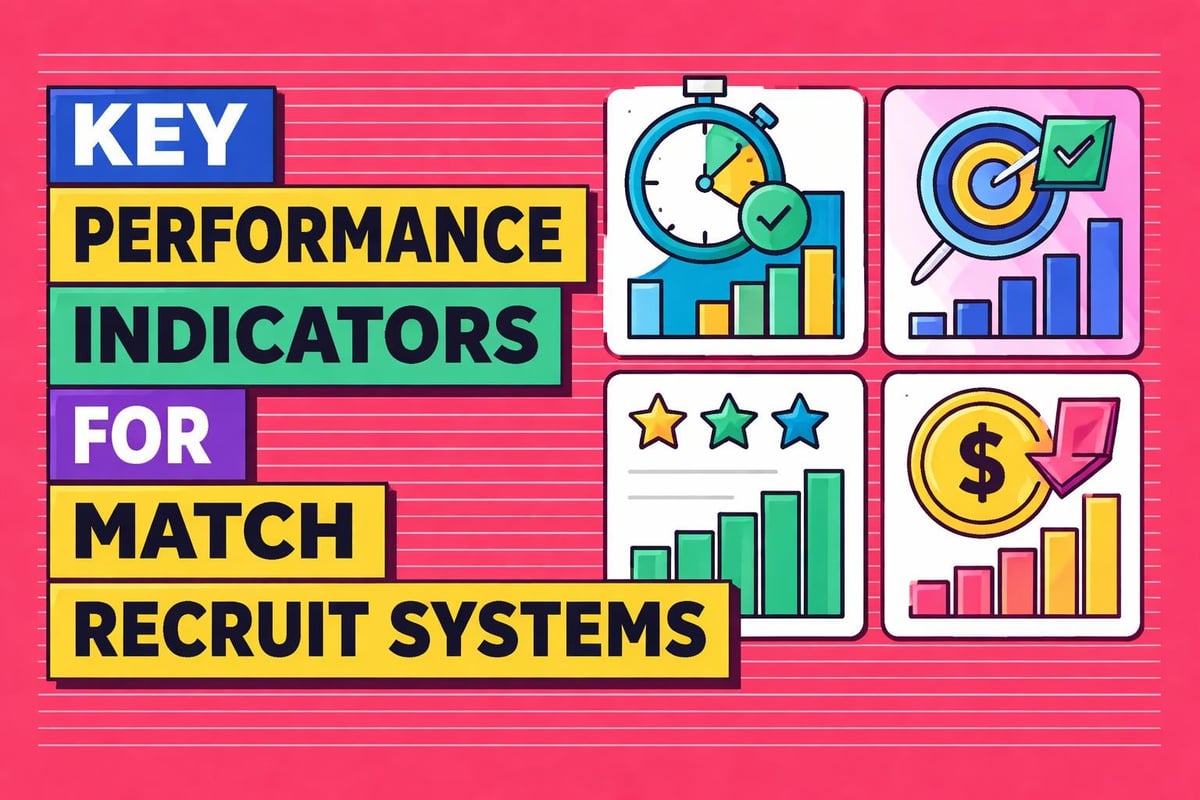
Match accuracy requires more nuanced measurement, typically assessed by tracking what percentage of highly-ranked candidates advance through subsequent hiring stages. If 80% of top-10-ranked candidates receive interview invitations compared to 30% under previous manual screening, the system demonstrates clear accuracy improvements. Tracking which highly-ranked candidates ultimately receive and accept offers provides the ultimate validation of matching quality.
Quality-of-hire metrics connect match recruit performance to business outcomes. Organizations measure new hire performance ratings, time-to-productivity, and retention rates, analyzing whether candidates identified through match recruit technology perform as well or better than those identified through previous methods. These metrics require longer measurement periods but provide the most meaningful assessment of system value.
Cost savings calculations should include both direct and indirect benefits. Direct savings come from reduced recruiter hours spent on initial screening. Indirect savings include reduced hiring manager time reviewing unqualified candidates, decreased time-to-fill reducing vacancy costs, and improved retention lowering replacement hiring expenses. Resume screening software implementations typically achieve ROI within six to twelve months when these comprehensive cost factors are considered.
Candidate experience metrics provide important supplementary data. Survey scores measuring application process satisfaction, time-to-first-contact, and communication quality often improve when match recruit systems enable faster, more consistent candidate engagement. These experience improvements contribute to employer brand strength even when candidates aren't ultimately hired.
Future Trends in Match Recruit Technology
The match recruit landscape continues evolving rapidly as artificial intelligence capabilities advance and integration possibilities expand. Skills-based matching is gaining prominence as organizations shift away from credential-focused hiring toward competency-based evaluation. Advanced systems assess transferable skills that enable career transitions, recognizing that candidates from non-traditional backgrounds may possess relevant capabilities even without conventional qualifications.
Video and assessment integration represents another emerging trend. Rather than relying solely on CV data, next-generation match recruit systems incorporate video interview analysis, skills assessment results, and behavioral evaluation data into their ranking algorithms. This multi-modal approach creates richer candidate profiles and more accurate matching.
Market intelligence integration enables match recruit systems to consider external factors in their rankings. Understanding current skill availability, salary expectations, and competitive hiring activity allows systems to flag candidates who represent exceptional value given current market conditions, even if their absolute match scores are moderate.
Diversity-aware matching addresses the growing emphasis on building inclusive teams. Advanced systems can identify candidates from underrepresented backgrounds whose qualifications might be overlooked by traditional screening while maintaining high quality standards. This requires sophisticated algorithm design that promotes diversity without sacrificing merit-based evaluation.
The shift toward continuous matching rather than point-in-time screening reflects changing talent acquisition strategies. Rather than matching candidates only when they apply, future systems will continuously monitor talent pools, tracking skill development, career progression, and changing availability to identify optimal timing for outreach.
Match recruit technology has transformed from a novel innovation into an essential capability for competitive talent acquisition in 2026. Organizations that master these systems gain substantial advantages in speed, quality, and efficiency while delivering better experiences for both candidates and hiring teams. The key to success lies in thoughtful implementation that combines technological capabilities with human expertise, continuous optimization based on performance data, and clear alignment with broader talent strategy. Klearskill provides recruitment teams with AI-powered candidate analysis that generates ranked shortlists in moments, enabling recruiters to focus their expertise on engaging top talent rather than manual CV review.


