
February 7, 2026
VP of Talent Acquisition Guide: Strategies for 2026 Success

Talent acquisition has reached new heights of complexity in 2026, challenging organizations to rethink how they compete for top talent. Keeping pace requires more than routine recruitment; it demands innovation and strategic vision from every vp of talent acquisition.
This comprehensive guide is designed to equip talent leaders with practical, forward-thinking strategies for success. Explore evolving responsibilities, strategic planning, AI and technology, diversity and inclusion, employer branding, future trends, and the essential leadership skills needed to excel in the year ahead.
The Expanding Role of the VP of Talent Acquisition in 2026
The role of the vp of talent acquisition in 2026 looks dramatically different from just a few years ago. Once focused mainly on filling open positions, today’s VPs must drive holistic strategies that impact every corner of the business. This transformation is both a response to and a driver of the complex workforce challenges organizations now face.
As organizations continue to navigate rapid digital transformation, the vp of talent acquisition is increasingly expected to align hiring practices with long-term business objectives. Strategic workforce planning is no longer optional. VPs must anticipate organizational needs, forecast future skills gaps, and ensure talent acquisition supports both current and future growth.
A core responsibility now includes leading cross-functional efforts with HR, finance, operations, and executive teams. The vp of talent acquisition sits at the intersection of these groups, translating business goals into actionable recruitment strategies. This shift demands not only expertise in talent markets but also business acumen and the ability to influence C-suite decisions.
Data-driven decision-making is another pillar of the modern vp of talent acquisition role. Advanced analytics enable VPs to track talent pipelines, evaluate sourcing effectiveness, and predict workforce trends. According to recent industry reports, VPs who leverage data-driven recruitment strategies consistently outperform peers in both quality of hire and time-to-fill metrics. The ability to interpret and act on data is now a defining competency.
Proactive talent pipeline development and succession planning have become mission-critical. The vp of talent acquisition is responsible for building robust networks of passive candidates and nurturing relationships long before a hiring need arises. This emphasis on readiness minimizes business disruption and ensures a steady flow of high-quality talent.
Expertise in global talent markets and remote workforce management is essential in 2026. The vp of talent acquisition must understand regional labor trends, navigate diverse regulatory environments, and deploy strategies for sourcing talent across borders. Managing distributed teams and remote recruitment processes has become an everyday requirement.
Organizations are increasingly recognizing the strategic value of the vp of talent acquisition by involving them in C-suite conversations. Industry data shows that more than 70 percent of Fortune 500 companies now include their VPs in executive planning sessions. This elevation reflects the direct impact that talent strategy has on overall business performance.
Continuous upskilling is non-negotiable for the vp of talent acquisition. The pace of change in recruitment technology, workforce expectations, and global competition requires ongoing learning. VPs must stay ahead of trends, invest in professional development, and foster a culture of innovation within their teams.
In summary, the vp of talent acquisition in 2026 is a business strategist, data expert, and global leader. Their expanded responsibilities position them as key architects of organizational success, driving both immediate hiring outcomes and long-term value.

Building a Future-Ready Talent Acquisition Strategy
The landscape for every vp of talent acquisition is shifting quickly as we approach 2026. Success now depends not just on filling roles, but on architecting a recruitment strategy that anticipates future business demands. Organizations must align hiring with broader objectives, build agility into every process, and leverage new tools to stay competitive. This section explores how the vp of talent acquisition can create a resilient, adaptive strategy that delivers measurable results and supports long-term growth.

Leveraging Data and Analytics for Strategic Decision Making
A future-ready vp of talent acquisition recognizes that data is central to effective hiring. Relying on intuition alone no longer suffices. Instead, advanced analytics provide clear insights across every stage of recruitment. By tracking sourcing metrics, candidate quality, and pipeline health, leaders can identify what works and where improvement is needed.
Predictive analytics have become especially powerful for workforce planning. They allow the vp of talent acquisition to forecast talent needs, model different scenarios, and make data-driven decisions that minimize risk. For example, organizations using predictive models have reduced time-to-hire by anticipating market shifts and responding proactively.
The integration of artificial intelligence has further amplified these advantages. AI-powered tools now help parse large datasets, surface patterns, and inform strategic choices. As detailed in AI in talent acquisition, these technologies are reshaping recruitment by enabling smarter, faster, and more objective decision-making.
Industry benchmarks show that companies embracing analytics see higher quality-of-hire and greater recruiter productivity. For the vp of talent acquisition, building analytics fluency is no longer optional. It is essential for staying ahead in a rapidly changing market.
Proactive Talent Pipeline Development
The vp of talent acquisition must take a proactive approach to building talent pipelines. Waiting for the right candidates to appear is no longer viable. Instead, cultivating ongoing relationships with passive candidates and former employees is critical.
Talent communities play a vital role in this strategy. By engaging potential hires through targeted content and networking, the vp of talent acquisition can ensure that a pool of qualified talent is always within reach. Alumni networks also provide a valuable resource for re-engaging proven performers.
Employer branding supports pipeline development by making the organization attractive to future talent. Companies that invest in their reputation and communicate a compelling value proposition consistently attract stronger candidates.
Proactive pipeline management leads to measurable benefits. Many organizations have reported significant reductions in hiring lead times and improved quality of hire. In high-demand industries, maintaining warm relationships with top talent gives the vp of talent acquisition a decisive competitive edge.
Integrating Workforce Planning with Business Objectives
To build a truly future-ready strategy, the vp of talent acquisition must synchronize recruitment with organizational growth plans. This alignment ensures that hiring supports both immediate needs and long-term transformation.
Scenario planning is a key technique. By modeling different business outcomes, the vp of talent acquisition can anticipate required skills and adjust hiring strategies accordingly. Skills gap analysis further helps pinpoint where development or external recruitment is necessary.
Collaboration across departments is vital. When HR, business leaders, and finance work together, they create a holistic view of talent needs and resource allocation. This integrated approach leads to more agile responses in a changing environment.
Research shows that organizations practicing integrated workforce planning experience greater agility and resilience. For the vp of talent acquisition, these techniques are not just best practices, but critical tools for ensuring the talent strategy is future-proof and aligned with business success.
Harnessing AI and Recruitment Technology for Competitive Advantage
Artificial intelligence is fundamentally reshaping how organizations approach talent acquisition. For every vp of talent acquisition, the rapid integration of AI and recruitment technology in 2026 is not just a trend but a business imperative. Modern AI solutions enable faster, smarter hiring while reducing bias and maximizing efficiency. According to AI's Impact on Talent Acquisition in 2026, over 70 percent of enterprises now use AI for at least one stage of their recruitment process, and adoption rates continue to rise as companies seek a competitive edge.
AI-powered systems automate candidate sourcing, screening, and ranking, freeing teams to focus on high-value interactions. These innovations offer measurable gains in speed, accuracy, and quality of hire, positioning the vp of talent acquisition as a strategic leader in digital transformation.
AI-Driven Candidate Screening and Shortlisting
AI-driven candidate screening has become the backbone of modern recruitment. For the vp of talent acquisition, leveraging these tools means applications and CVs are instantly analyzed against job requirements, skills, and experience. Customizable AI scoring models ensure that only the most qualified candidates progress, dramatically reducing manual review time.
Organizations report up to 92 percent time savings in the initial screening phase. Bias is also minimized, with some platforms achieving 99 percent reduction in unconscious bias by applying objective, data-driven criteria. This ensures that every candidate is evaluated fairly, regardless of background.
A vp of talent acquisition benefits from the consistency and accuracy of AI-powered shortlisting. These systems learn and adapt, continually refining their criteria based on feedback and outcomes. As a result, hiring teams can focus on engaging with top talent, rather than sifting through hundreds of resumes. The outcome is a more agile, equitable, and effective recruitment process that supports organizational growth.
Seamless Workflow Integration and Analytics
Integrating AI tools with existing ATS and HR systems is essential for a vp of talent acquisition striving for operational excellence. Modern AI solutions provide seamless connections, allowing data to flow freely between platforms. This enables real-time analytics and reporting, empowering leaders to monitor key metrics and optimize recruitment strategies on the fly.
Visual pipelines and drag-and-drop workflow management make it easier to track candidate progress and team performance. Recruiters can instantly see where each candidate stands, identify potential bottlenecks, and adjust tactics accordingly. These capabilities drive significant improvements in recruiter productivity and hiring accuracy.
For the vp of talent acquisition, the ability to access actionable insights is a game changer. Real-time dashboards display sourcing effectiveness, pipeline health, and conversion rates, supporting evidence-based decision making. The result is a recruitment function that is both proactive and responsive, ready to meet evolving business needs.
How AI-Powered Recruitment Platforms Like Klearskill Transform Talent Acquisition
Advanced AI recruitment platforms such as Klearskill are redefining what’s possible for the vp of talent acquisition. These solutions automate candidate screening, deliver bias-free shortlists, and provide deep insights for talent leaders. Multilingual support and customizable analysis tools enable organizations to meet the demands of global and diverse hiring.
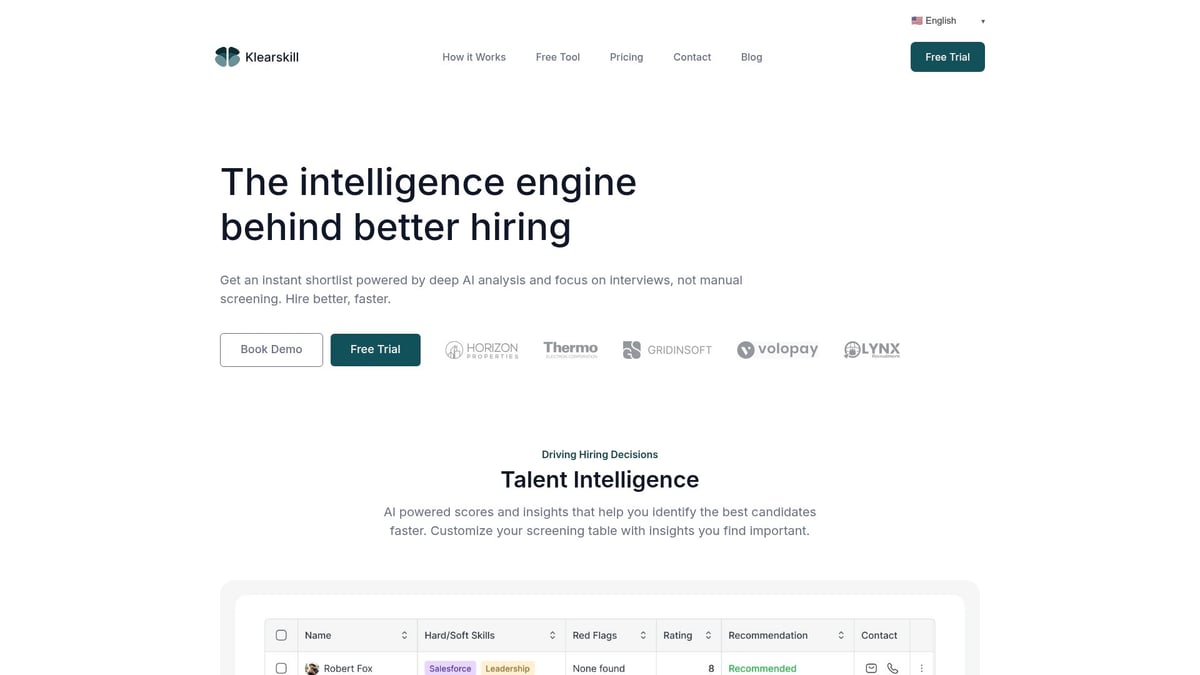
Klearskill’s seamless ATS integration ensures a unified workflow, while its robust analytics offer clear, actionable guidance. For the vp of talent acquisition, these features translate into dramatic time savings, improved match accuracy, and data-driven decision making that drives business results.
Embedding Diversity, Equity, and Inclusion (DEI) in Talent Acquisition
For every vp of talent acquisition, embedding diversity, equity, and inclusion into hiring practices is no longer optional. In 2026, DEI is a business imperative, directly influencing organizational innovation, adaptability, and long-term growth. Companies that prioritize inclusive recruitment outperform peers in engagement and retention, setting new benchmarks for talent management.
However, achieving measurable DEI progress requires more than good intentions. It demands a strategic, data-driven approach that aligns with broader business goals. As organizations compete globally for top talent, the vp of talent acquisition must champion DEI as a core pillar of their strategy.

Creating Inclusive Hiring Processes
The vp of talent acquisition must ensure every step of the hiring process is designed for fairness and accessibility. This begins with crafting job descriptions that use inclusive language and focus on essential skills rather than restrictive requirements. Unbiased sourcing strategies, such as blind resume reviews, help widen the pool of qualified candidates. Structured interviews, with standardized questions and evaluation criteria, further reduce subjectivity and promote equity.
Leading organizations have adopted technology to support these efforts. AI-powered tools can flag biased language in job postings and analyze candidate pools for representation gaps. Some companies are using diverse interview panels to capture a broader perspective in evaluations. Data consistently shows that inclusive practices increase the proportion of underrepresented hires and improve overall candidate quality.
Measuring progress is just as important as taking action. Regular audits of hiring data, combined with transparent reporting, allow the vp of talent acquisition to identify bottlenecks and opportunities for improvement. For actionable insights and proven frameworks, explore these Diversity hiring strategies that are helping organizations embed DEI at every stage.
Promoting a Culture of Belonging
The work of the vp of talent acquisition does not end when a diverse candidate accepts an offer. Creating a culture where every employee feels valued and included is critical for retention and performance. Onboarding programs tailored to different backgrounds set the tone for inclusion from day one. Mentorship initiatives and employee resource groups provide essential support networks and foster connection.
Companies investing in belonging see measurable results. According to recent studies, organizations with strong cultures of inclusion experience up to 50 percent higher retention rates and greater employee satisfaction. The vp of talent acquisition can further drive impact by collaborating with leadership to ensure DEI objectives are reflected in performance metrics and recognition programs.
Continuous feedback loops, such as pulse surveys and focus groups, help identify areas for improvement and celebrate progress. When employees see their voices matter, engagement rises and the organization becomes an employer of choice for diverse talent.
Embedding DEI into talent acquisition is an ongoing journey. By leveraging data, technology, and a commitment to inclusion, the vp of talent acquisition positions their organization for long-term success in a rapidly evolving workforce.
Elevating Employer Brand and Candidate Experience
In 2026, employer branding stands at the forefront of talent acquisition strategy. Organizations face fierce competition for top talent, making the employer brand a critical differentiator. For any vp of talent acquisition, the employer brand is not just a marketing tool but a strategic asset that shapes perceptions, attracts high-caliber candidates, and sets the foundation for long-term success.
A compelling employer value proposition (EVP) is the cornerstone of a strong employer brand. The process begins by identifying what truly sets your organization apart, such as culture, development opportunities, or unique benefits. Authenticity is essential. Candidates quickly recognize generic messaging, so the vp of talent acquisition must ensure the EVP accurately reflects the organization’s ethos. For example, organizations that regularly survey employees and incorporate feedback into their EVP see higher engagement and application rates. Aligning the EVP with company culture builds trust and draws in candidates seeking more than just compensation.
Communicating the EVP relies on a multi-channel approach. Careers pages, social media, and employee advocacy programs amplify the organization’s message. Digital storytelling, including employee testimonials and behind-the-scenes content, brings the EVP to life. The vp of talent acquisition should also leverage platforms that highlight company culture and values, providing an authentic view into the employee experience. According to Employer branding best practices, a consistent and transparent digital presence significantly increases candidate engagement and application quality.
Candidate experience is equally vital. Every interaction, from application to onboarding, shapes perceptions of the employer brand. Streamlined application processes, timely communication, and personalized feedback create a positive journey. The vp of talent acquisition should champion the use of automation and technology to ensure efficiency without sacrificing the human touch. Organizations recognized for exceptional candidate experiences report higher offer acceptance rates and stronger reputations in the market.
Employer brand and candidate experience are closely linked to recruitment outcomes. Data reveals that companies with strong employer brands see up to 50 percent more qualified applicants and up to 28 percent lower turnover. The vp of talent acquisition who invests in ongoing employer branding and candidate experience initiatives positions their organization as an employer of choice. In a rapidly evolving market, this focus is not optional, but essential for securing the talent that will drive future growth.
Future Trends and Essential Skills for VP of Talent Acquisition Success
Staying ahead in talent acquisition requires vigilance, adaptability, and strategic foresight. As organizations navigate 2026, the vp of talent acquisition finds their role shaped by new hiring models, technological disruption, and shifting workforce expectations.
The landscape is changing faster than ever. Skills, not just credentials, drive hiring decisions. Flexibility and digital fluency are paramount as remote work and global recruitment redefine the boundaries of talent acquisition. For those ready to lead, embracing these trends is not just an advantage but a necessity.
Embracing Skills-Based Hiring and Internal Mobility
Skills-based hiring is fundamentally reshaping how organizations evaluate and attract talent. The vp of talent acquisition must pivot from traditional credential-based frameworks to a skills-first mindset. This shift enables companies to tap into broader, more diverse talent pools and to accurately assess candidates' true potential.
AI-driven assessments and internal talent marketplaces are central to this approach. By prioritizing upskilling and reskilling, companies empower employees to grow from within, boosting retention and performance. Recent studies such as the AI Skills Improve Job Prospects Study show that candidates with demonstrated AI skills are more attractive to employers and can overcome traditional hiring disadvantages, underscoring the value of ongoing learning.
The gig economy further accelerates this trend. Project-based roles allow organizations to access specialized expertise on demand. The vp of talent acquisition is responsible for cultivating agile talent pools and ensuring mobility pathways are clear, accessible, and aligned with business needs.
Data reveals that organizations investing in skills-based recruitment see substantial increases in employee engagement and internal mobility rates. By building robust frameworks for skills evaluation, the vp of talent acquisition ensures their teams are equipped to meet evolving business requirements and future-proof the organization’s workforce.
Leading Through Change and Digital Transformation
The future demands that every vp of talent acquisition becomes a champion of change. Navigating digital transformation requires resilience, adaptability, and a commitment to continuous learning. Digital fluency is now a core competency, as AI, automation, and advanced analytics become integral to every stage of the recruitment process.
Strategic agility is essential. Leaders must anticipate market shifts, adopt new technologies, and guide teams through uncertainty. The ability to manage stakeholders, foster collaboration, and communicate vision is more critical than ever.
Recent insights on AI's Role in Future Hiring Practices highlight the transition of AI from automating tasks to supporting complex decision-making. Human oversight remains vital, especially as algorithms influence candidate selection and talent strategy. The vp of talent acquisition must balance the efficiency of technology with ethical considerations and a human-centric approach.
Forward-thinking organizations empower their VPs to drive innovation, leading by example as change agents. With strong leadership, teams are more likely to embrace transformation, adopt new tools, and deliver exceptional results, even in times of disruption.
The path to success in 2026 is clear for those who invest in their own development and champion change at every level.
As you look ahead to 2026, it’s clear that staying ahead in talent acquisition means embracing new strategies, leveraging AI, and leading with data-driven confidence. You already know the stakes—fast, accurate hiring and a seamless candidate experience are essential for your organization’s success. If you’re ready to put these insights into practice and see the impact firsthand, you don’t have to wait. Take the next step and empower your team to work smarter with cutting edge AI that shortlists top talent in moments. Let’s shape the future of recruitment together—Start free trial


