
February 26, 2026
Best Book on Hiring: Top Reads for Recruiters in 2026
Hiring the right people remains one of the most critical challenges facing organizations today. Whether you're building a startup team or scaling an enterprise, the quality of your hiring decisions directly impacts business success. Finding the best book on hiring can provide frameworks, methodologies, and proven strategies that transform how you approach talent acquisition. The recruitment landscape has evolved dramatically with technology, yet fundamental principles about understanding human potential and organizational fit remain timeless. This guide explores the essential reading material that every recruiter, hiring manager, and HR professional should consider to elevate their hiring practices.
Understanding Why Reading About Hiring Matters
The cost of a bad hire extends far beyond wasted salary. Organizations face decreased productivity, damaged team morale, and potential customer impact when the wrong person joins the team. Research consistently shows that hiring mistakes can cost companies between one and three times the annual salary of the position.
Reading extensively about hiring provides several advantages that direct experience alone cannot offer. Books distill decades of research and real-world testing into actionable frameworks. They expose you to diverse perspectives across industries and company sizes. Most importantly, they help you avoid repeating common mistakes that others have already made and documented.
The top recruitment books cover everything from sourcing strategies to interview techniques to cultural assessment. Each offers unique insights shaped by the author's background and expertise. Some focus on psychological principles, others on operational efficiency, and still others on leveraging technology effectively.
Who Gets Hired Is How You Grow by Geoff Smart and Randy Street
This bestseller presents the A Method for Hiring, a systematic approach that reduces hiring failures significantly. The authors researched thousands of hiring decisions to identify what separates successful hires from disasters. Their methodology emphasizes precision in defining roles, rigorous screening processes, and structured interviewing.
The book introduces the concept of scorecards rather than job descriptions. A scorecard defines the mission of the role, outcomes expected, and competencies required. This clarity helps both recruiters and candidates understand exactly what success looks like. The specificity eliminates vague requirements that lead to mismatched expectations.
Their four-step process includes sourcing, selecting, selling, and delivering. Each phase has specific tools and techniques. The Topgrading Interview method they recommend involves chronological walkthrough of a candidate's career, revealing patterns of success and areas of concern. This thoroughness takes time but dramatically improves hiring accuracy.
Organizations implementing these structured approaches often integrate them with modern AI tools for talent acquisition that can handle initial screening while maintaining the rigor the methodology demands. The combination of systematic human judgment and technological efficiency creates optimal results.
Work Rules by Laszlo Bock
Written by Google's former head of People Operations, this book reveals the data-driven hiring practices that helped build one of the world's most successful companies. Bock shares insights from analyzing millions of interviews and hiring decisions. The transparency about what worked and what failed makes this particularly valuable.
Google's approach challenges conventional wisdom repeatedly. They found that brainteasers and puzzle questions have zero predictive validity for job performance. Instead, structured behavioral interviews and work sample tests proved far more effective. The book explains how to design these assessments for different roles.
The emphasis on committees rather than individual decision-makers reduces bias significantly. Multiple perspectives catch red flags that single interviewers miss. The book provides practical guidance on structuring these committees and making final decisions when opinions diverge.
Many principles from Work Rules align perfectly with how modern recruitment automation handles preliminary candidate evaluation. Technology excels at consistency and eliminating unconscious bias in initial screening, allowing human reviewers to focus on nuanced assessment where judgment matters most.
The Five Dysfunctions of a Team by Patrick Lencioni
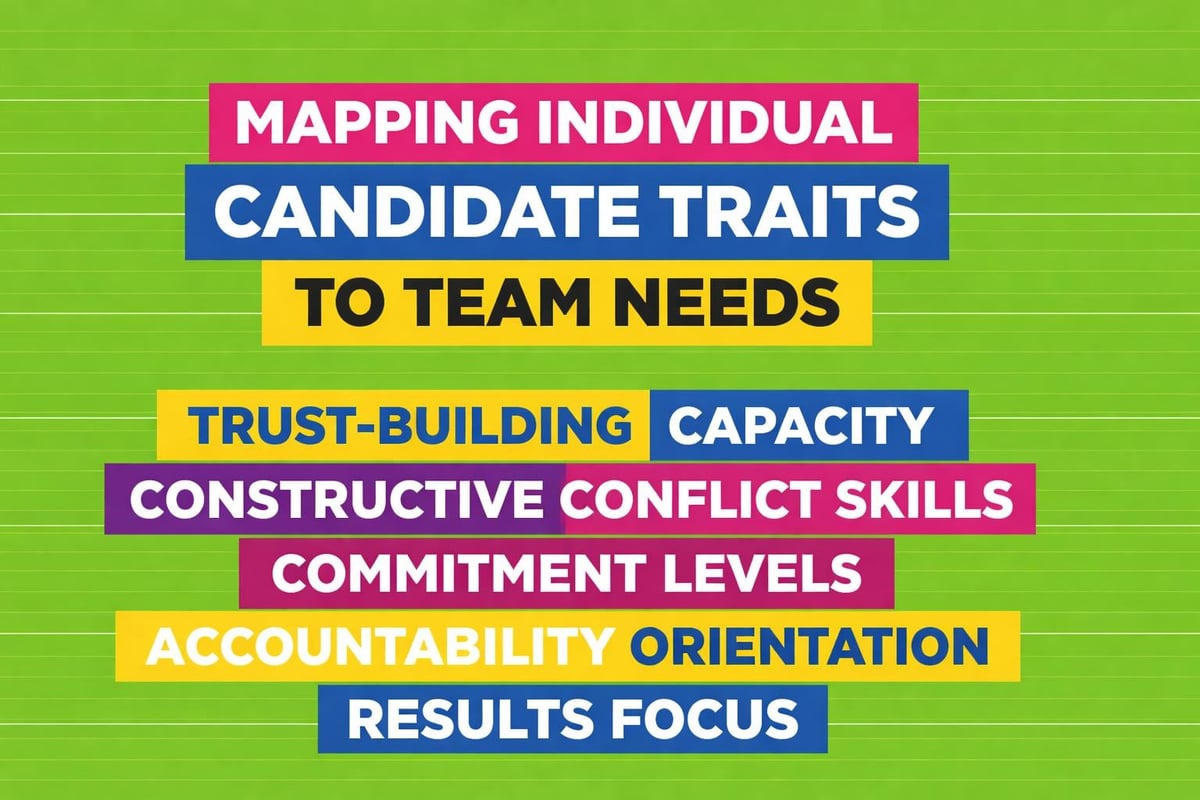
While not exclusively about hiring, this leadership fable transforms how you think about team composition. Lencioni identifies absence of trust, fear of conflict, lack of commitment, avoidance of accountability, and inattention to results as the core dysfunctions. Understanding these shapes what you look for in candidates.
The pyramid model shows how each dysfunction builds on the others. When hiring, you need people who can be vulnerable, engage in healthy debate, commit fully to decisions, hold peers accountable, and prioritize collective results. These characteristics prove difficult to assess in traditional interviews.
Behavioral questions that probe past examples of these qualities become essential. Asking candidates to describe times they admitted mistakes, engaged in difficult conversations, or sacrificed personal recognition for team success reveals much about their fit. The book provides frameworks for identifying these traits during selection.
Teams built with these principles in mind perform dramatically better. The best book on hiring often depends on your specific challenges, but understanding team dynamics fundamentally improves who you select. Combining these insights with resume screening software that identifies relevant experience creates a comprehensive evaluation process.
Talent Makers by Daniel Chait and Jon Stross
This recent addition to hiring literature focuses specifically on building recruitment excellence as a competitive advantage. The authors argue that most companies treat hiring as a necessary evil rather than a strategic priority. Organizations that flip this mindset and invest in hiring infrastructure outperform competitors consistently.
The book introduces the concept of a Talent Acquisition scorecard that measures recruiting effectiveness across multiple dimensions. Metrics include time to hire, quality of hire, candidate experience scores, and hiring manager satisfaction. What gets measured gets improved, and these frameworks create accountability.
Chait and Stross emphasize that everyone in the organization should be a recruiter. Building a referral culture, training managers on interviewing, and creating compelling employer branding all contribute to talent acquisition success. The operational playbooks provided make implementation straightforward.
Modern applicant tracking software amplifies these principles by providing the infrastructure to execute at scale. Technology handles workflow management, communication tracking, and data collection while humans focus on relationship building and judgment calls that require nuanced thinking.
Thinking Fast and Slow by Daniel Kahneman
This Nobel Prize-winning work on behavioral economics fundamentally changes how you approach hiring decisions. Kahneman explains System 1 thinking (fast, intuitive, emotional) versus System 2 thinking (slow, deliberate, logical). Most hiring decisions rely too heavily on System 1, leading to predictable errors.
The halo effect causes interviewers to let one positive trait influence their entire assessment. Confirmation bias leads people to seek information that supports initial impressions rather than challenging them. Anchoring makes early information disproportionately influential. Understanding these cognitive biases is essential for improving hiring.
Structured interviews with predetermined questions and scoring rubrics force System 2 thinking. Breaking the hiring decision into independent assessments of different attributes prevents one factor from contaminating others. The book provides scientific backing for why rigorous processes outperform gut feelings.
For recruiters seeking the best book on hiring that combines psychology with practical application, this stands out. The principles apply directly to designing better interview evaluation forms and templates that counteract natural human biases through structure and standardization.
The Alliance by Reid Hoffman, Ben Casnocha, and Chris Yeh
LinkedIn founder Reid Hoffman presents a radically different approach to the employer-employee relationship. Rather than pretending jobs are permanent or treating employees as disposable, The Alliance proposes tours of duty. This mindset shift changes who you hire and how you position opportunities.
Each tour of duty has defined objectives, timelines, and success criteria. Candidates commit to accomplishing specific goals rather than indefinitely performing a role. This clarity attracts ambitious, entrepreneurial people who want to make impact. It repels those seeking comfortable stability without growth.
The book distinguishes between rotational, transformational, and foundational tours. Different roles and career stages require different approaches. Understanding this helps you articulate value propositions that resonate with top talent. The mutual investment framework creates stronger commitment than traditional employment contracts.
Organizations implementing these ideas often need to rethink their entire approach to talent acquisition. The best HR software for startups increasingly includes features supporting project-based team structures and flexible role definitions that align with this philosophy.
Built to Last by Jim Collins and Jerry Porras
This classic business book examines what separates enduring, exceptional companies from their competitors. While focused broadly on organizational excellence, the hiring implications prove profound. Visionary companies hire and promote people who fit their core values while adapting strategies as markets evolve.
Collins and Porras introduce the concept of cult-like cultures with clear ideologies. This doesn't mean unhealthy workplaces but rather organizations with strong, explicit values that guide all decisions. Hiring for values fit becomes as important as technical skills. People who don't align with core principles struggle regardless of competence.
The research shows that great companies develop leaders from within rather than hiring external saviors. This finding emphasizes hiring for potential and learning ability over current expertise. Looking for curiosity, adaptability, and growth mindset during selection predicts long-term success better than checking boxes on experience requirements.
Many books every recruiter should read include Built to Last precisely because it connects hiring to sustainable organizational excellence. Understanding this relationship elevates recruitment from administrative function to strategic imperative.
Powerful by Patty McCord
Netflix's former chief talent officer shares the radical practices that helped build one of the most innovative companies in entertainment. McCord challenges conventional HR wisdom repeatedly. Netflix eliminated formal performance reviews, unlimited vacation policies, and traditional retention strategies in favor of treating employees as adults.
The hiring philosophy centers on hiring only fully-formed adults who need minimal management. This raises the bar significantly on who gets offers. Netflix looks for people with excellent judgment, selflessness, courage, and communication skills. Technical abilities matter, but character and maturity prove more important.
McCord advocates for extreme transparency throughout the hiring process. Candidates should understand exactly what the company needs, what success looks like, and what won't work. This honesty prevents mismatched expectations. People who want something different self-select out, saving everyone time and disappointment.
The Netflix approach isn't right for every organization, but the principles about hiring mature professionals and maintaining high performance density apply broadly. Implementing these ideas often requires supporting technology, and understanding AI tools for HR that can maintain rigorous standards while processing high volumes proves essential.
Additional Resources Worth Exploring
Beyond these core texts, several other works deserve attention depending on your specific needs. The Essential HR Handbook by Sharon Armstrong and Barbara Mitchell provides comprehensive operational guidance. Recruit Rockstars by Jeff Hyman offers practical tactics for fast-growing companies. Hiring for Attitude by Mark Murphy focuses on cultural fit assessment.
For those interested in startup hiring books, The Hard Thing About Hard Things by Ben Horowitz and Zero to One by Peter Thiel both contain valuable sections on building initial teams. These resources address the unique challenges of hiring when you lack brand recognition and compete against established companies.
Industry-specific resources also matter. Technology recruiters benefit from different perspectives than healthcare or manufacturing recruiters. Seeking out books written by people who understand your domain increases relevance. The fundamental principles remain consistent, but application varies significantly.
Academic research provides another dimension of insight. Studies on data-driven HR practices and resume analysis using natural language processing reveal how technology can augment human judgment. Understanding the science behind modern recruitment methods helps you implement them more effectively.
Implementing What You Learn
Reading the best book on hiring delivers value only when you actually apply the lessons. Start by auditing your current process against the frameworks presented. Identify specific gaps between what research recommends and what you're doing. Prioritize changes based on impact and feasibility.
Standardizing interviews provides quick wins with minimal investment. Create structured question sets for each role with clear scoring criteria. Train interviewers on consistent evaluation. This simple change dramatically improves hiring quality by reducing variability and bias.
Defining role scorecards as Smart and Street recommend clarifies expectations for everyone involved. Hiring managers articulate what success actually looks like. Recruiters know exactly what to screen for. Candidates understand how they'll be evaluated. This alignment prevents miscommunication that derails hiring.
Building hiring excellence as a capability requires ongoing investment. Regular training for hiring managers, continuous improvement of processes based on data, and treating candidate experience as a priority all contribute to better outcomes. Organizations that view hiring as strategic rather than tactical consistently attract stronger talent.
Technology as an Enabler of Better Hiring
The best books on hiring increasingly acknowledge technology's role in modern recruitment. While human judgment remains irreplaceable for final decisions, technology handles repetitive tasks more efficiently and consistently. Understanding where automation helps versus where human insight matters becomes critical.
Initial resume screening represents an ideal use case for AI. Reviewing hundreds of applications for basic qualifications wastes valuable recruiter time. AI resume screening tools can evaluate experience, education, and skills against requirements instantly. This allows recruiters to focus on nuanced assessment of qualified candidates.
Structured data collection during interviews enables better analysis. Recording consistent information about each candidate across standardized criteria makes comparison objective rather than subjective. Technology platforms facilitate this consistency while humans conduct the actual conversations and make judgments.
Analytics reveal patterns that improve future hiring. Tracking which sources produce successful hires, which interview questions predict performance, and which characteristics correlate with retention allows continuous refinement. Data-driven approaches complement rather than replace the wisdom found in great hiring books.
Creating Your Personal Reading Plan
With dozens of excellent books available, choosing where to start can feel overwhelming. Consider your current role and immediate challenges. Hiring managers benefit from different books than recruiters. Startup founders need different perspectives than corporate HR professionals.
Begin with one foundational text that addresses your biggest pain point. If you're making too many hiring mistakes, start with Who by Smart and Street. If bias concerns you, begin with Thinking Fast and Slow. If cultural fit proves elusive, try The Five Dysfunctions of a Team.
Supplement books with articles from sources that curate recruitment books and provide contemporary perspectives. The field evolves constantly, and staying current requires combining timeless principles with modern practices. Balance classic texts with recent releases addressing new challenges.
Create a schedule that makes reading sustainable rather than overwhelming. Committing to one book per quarter allows deep engagement with ideas while maintaining momentum. Discussing what you read with colleagues or joining book groups amplifies learning through shared perspectives.
Mastering the art and science of hiring requires continuous learning from multiple sources. The best book on hiring ultimately depends on your specific context, but investing time in reading proven frameworks dramatically improves outcomes. Whether you're just starting to build hiring expertise or refining already strong practices, these resources provide invaluable guidance. Klearskill complements this knowledge by using AI to analyze candidate CVs and rank applicants, giving you a qualified shortlist in moments so you can spend more time on the strategic evaluation and relationship-building that books emphasize as critical to hiring success.


